What Is Sandless Wood Floor Refinishing? (Process, Cost, Pros & Cons for Denver Homeowners)
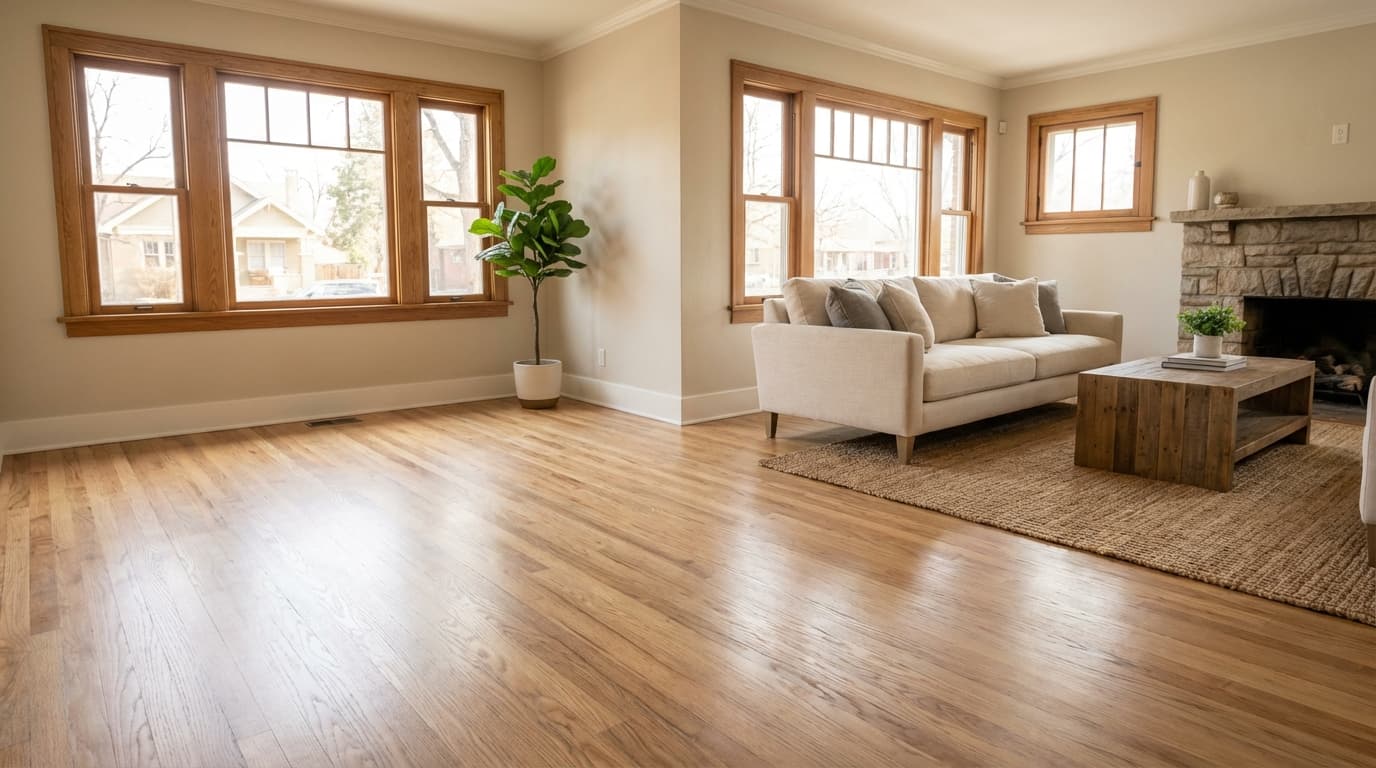
Sandless wood floor refinishing restores your hardwood's shine and protection in just one day—without the dust, noise, or expense of traditional sanding. The process uses light abrasion or chemical prep to bond a fresh finish coat to your existing floor, making it ideal for surfaces with dullness or light scratches that don't require full refinishing.
Below, we'll cover exactly how sandless refinishing works, what it costs in the Denver area, which floors qualify, and how to decide if it's the right fit for your home.
What Is Sandless Wood Floor Refinishing
Sandless wood floor refinishing is a one-day process that restores your hardwood's shine and protection without heavy sanding equipment or clouds of dust filling your home. Instead of drum sanders that grind away layers of wood, this method uses light abrasion or chemical solutions to prep the existing finish for a fresh topcoat. The whole job typically wraps up in a single day, and you're looking at roughly $1.50–$4.00 per square foot depending on your floor's condition and size.
You'll hear different names for this process. Screening and recoating, no-sand refinishing, dustless refinishing—they all describe the same basic approach. The idea is simple: clean the floor thoroughly, lightly scuff the existing finish so the new coat can bond properly, then apply a fresh protective layer on top.
Here's the honest truth about what sandless refinishing can and can't do. It works beautifully for floors with surface-level wear—dullness, light scratches, traffic patterns where the finish has worn thin. However, it won't fix deep gouges, stains that have soaked into the wood grain, or areas where bare wood is already showing through. For damage that goes beyond the finish layer, traditional sanding is still the answer.
How Sandless Floor Refinishing Works
The process itself is pretty straightforward, and that simplicity is part of what makes one-day completion possible. Let's walk through each step so you know exactly what happens when a crew shows up at your door.
1. Floor cleaning and preparation
First things first: your floors get a thorough deep cleaning. This removes dirt, dust, old cleaning product residue, and anything else that might prevent the new finish from sticking properly. Technicians also move or protect furniture and lay down drop cloths along baseboards and adjacent surfaces.
This cleaning step matters more than most people realize. Even tiny particles trapped under the new finish can cause adhesion problems down the road, or leave visible bumps and imperfections in the final result. A clean surface is the foundation for everything that follows.
2. Surface abrading without heavy sanding
Now comes the part that gives sandless refinishing its name. Instead of aggressive drum sanding that removes actual wood, technicians use a buffer fitted with a fine abrasive screen to lightly scuff the existing finish. Some methods use chemical etching solutions instead. Either way, the goal is creating just enough texture for the new coat to grip—without removing any wood material.
The dust difference is dramatic. Traditional sanding fills your entire home with fine particles that settle on countertops, get into HVAC systems, and take days to fully clean up. Screening produces minimal dust, and what little there is gets contained easily with basic precautions.
3. Applying the new finish coat
Once the surface is prepped, technicians apply a fresh coat of polyurethane or similar protective finish. You can typically choose your sheen level based on the look you want:
- Matte: Low shine, hides imperfections well, popular in modern homes
- Satin: Subtle glow, the most common choice for living spaces
- Semi-gloss: More reflective, shows off wood grain nicely
- High-gloss: Maximum shine, dramatic but shows scratches more easily
Modern finishes dry quickly. Light foot traffic is usually fine within a few hours, though full cure time for heavy furniture typically runs 24–48 hours. Your technician will give you specific timing based on the products used and conditions in your home.
Types of Floors for No Sand Hardwood Floor Refinishing
Not every floor is a good candidate for sandless refinishing. Knowing whether yours qualifies can save you time and help you plan the right approach from the start.
Solid hardwood floors
Solid hardwood is the ideal candidate when the existing finish is worn but the wood underneath remains intact. If you're seeing dullness, light scratches, or traffic patterns—but no bare wood showing through—sandless refinishing can restore the appearance beautifully. Most solid hardwood floors that were refinished within the last 7–10 years fall into this category.
Engineered wood floors
Engineered wood presents a unique situation. The wear layer on top is often too thin for traditional sanding without risking damage to the floor. Sandless refinishing becomes the safer choice here since it doesn't remove any material from the surface. Many homeowners with engineered floors don't realize this option exists and assume their only choices are living with worn floors or full replacement.
Bamboo and cork floors
Bamboo and cork can't be sanded traditionally without risking serious damage to the material. Chemical prep methods work well on both, making sandless refinishing the go-to approach for these floor types. If you have bamboo or cork and want to refresh the finish, sandless is likely your only professional option.
Floors that may require traditional refinishing
Let's be direct about the limitations. Sandless refinishing won't work for every situation, and any company that promises otherwise isn't being straight with you. Traditional sanding becomes necessary when:
- Deep scratches have exposed bare wood
- Pet urine has soaked into the grain (not just the finish)
- Water damage has warped or deeply stained the wood
- You want to change the stain color dramatically
- Multiple previous finish layers are peeling or failing
A professional assessment can tell you which approach fits your specific situation. At OneDayFinish, estimates are free and come with honest recommendations—even if that means telling you sandless isn't the right fit.
Benefits of Dustless Wood Floor Refinishing
The advantages of sandless refinishing come down to three things: speed, cleanliness, and cost. Here's what that looks like in practice.
- Minimal mess: No airborne dust settling on furniture, countertops, and into your HVAC system. Your home stays livable throughout the process.
- Fast turnaround: Most jobs complete in one day, so your routine barely gets interrupted. Compare that to traditional refinishing, which can take 3–5 days plus additional drying time.
- Lower cost: Sandless refinishing typically runs about half the price of full refinishing since it requires less labor, equipment, and time.
- Less disruption: Rooms become usable again within hours, not days. No need to relocate your family or board the pets.
- Preserves wood: No material gets removed from your floor surface. This extends the floor's overall lifespan and keeps future refinishing options open.
For busy Denver families who can't afford multi-day projects or extensive cleanup, the combination of one-day completion and minimal dust often makes the decision easy.
How Much Does No Sand Floor Refinishing Cost
Pricing varies based on several factors, but sandless refinishing consistently costs less than traditional methods. Here's how the two approaches compare.
Sandless vs traditional refinishing cost comparison
| Factor | Sandless Refinishing | Traditional Sanding |
|---|---|---|
| Typical timeframe | One day | 3–5 days |
| Dust level | Minimal to none | Significant |
| Wood removal | None | Removes wood layer |
| Best for | Surface wear, dullness | Deep damage, stains |
| Home disruption | Minimal | Substantial |
Factors that affect sandless refinishing price
Your final quote depends on several variables specific to your project:
- Square footage: Larger areas cost more but often have a lower per-square-foot rate
- Floor condition: Floors with heavy buildup or damage may require extra prep work
- Number of coats: Some situations call for multiple finish coats
- Accessibility: Tight spaces, stairs, or lots of furniture to work around can add time
- Finish type: Premium finishes cost more than standard options
The most accurate way to know your cost is a professional assessment. At OneDayFinish, estimates are free, written, and include everything—materials, labor, and cleanup. The price we quote is the price you pay. No hidden fees or surprise charges at the end.
When to Choose Sandless vs Traditional Refinishing
Picking the right approach from the start saves you time, money, and frustration. Here's how to think through the decision.
Best candidates for sandless refinishing
Sandless refinishing works well when your floors have surface-level wear but the wood itself remains in good shape. Good candidates include floors showing dullness or light scratches, engineered wood or bamboo flooring, homes where you want fast and clean results, and floors that were refinished within the last decade. If you can run your hand across the floor and feel the wood grain through worn spots, sandless might still work—but you're getting close to the line.
When full sanding is necessary
Traditional refinishing becomes the better choice when damage goes beyond the finish layer. Deep scratches exposing bare wood, water damage that has warped or stained the wood, pet urine that has soaked into the grain, and situations where you want to dramatically change the stain color all call for traditional sanding. The same goes for floors with multiple previous finish layers that are peeling or failing.
If you're unsure which category your floors fall into, a quick professional inspection can point you in the right direction. No pressure—just honest information to help you decide.
Is Sandless Floor Refinishing Worth It
For the right situation, sandless refinishing delivers excellent value. You get renewed floors at roughly half the cost of traditional refinishing, completed in one day instead of several, with virtually no dust disrupting your home. For floors with surface-level wear, the results look great and last for years.
The key is matching the method to your floor's actual condition. Sandless refinishing performs well on floors with dullness, light scratches, and worn finish. It won't perform miracles on deeply damaged wood—and realistic expectations lead to satisfied customers.
At OneDayFinish, every job comes with a 100% satisfaction guarantee. If you're not happy with the results, we make it right at no extra cost. That removes the risk from your decision and lets you move forward with confidence.
Get Your Denver Floors Refinished in One Day
OneDayFinish serves the Denver metro area and surrounding communities within 30 miles—including Cherry Creek, Highlands, Washington Park, Lakewood, Boulder, Littleton, Aurora, Arvada, and Westminster.
Here's what you can expect when you work with us:
- Free estimates within 24 hours
- Most jobs completed in one day
- Licensed, insured, and background-checked technicians
- $2M liability coverage
- 100% satisfaction guarantee
Ready to see what your floors could look like? Call, text, or request your free estimate online. We'll schedule an appointment within 7 days in most cases.
No pressure.
FAQs About Sandless Wood Floor Refinishing
How long does sandless wood floor refinishing last?
With normal foot traffic and proper maintenance, a sandless refinish typically lasts 3–5 years before another recoat becomes necessary. High-traffic homes may see wear sooner, while lighter-use spaces often go longer. Regular cleaning with pH-neutral products helps extend the life of your finish.
Can sandless floor refinishing remove deep scratches from hardwood?
No. Sandless refinishing addresses surface-level wear and light scratches only. Deep scratches that penetrate through the finish into the wood itself require traditional sanding to repair properly. A professional assessment can tell you whether your scratches are surface-level or deeper.
Is sandless refinishing safe for homes with pets and children?
Yes. The process produces minimal dust, and modern water-based finishes have low VOCs and cure quickly. Most families can return to normal activity within hours of completion. Pets and kids can typically be back on the floors the same day, though keeping them off during the actual work is a good idea.
How soon can you walk on floors after sandless refinishing?
Light foot traffic is typically fine within 2–4 hours, though your technician will provide specific guidance based on the products used. Full cure time for heavy furniture usually runs 24–48 hours. Avoid sliding furniture across the surface until the finish has fully hardened.
Where can I find no sand hardwood floor refinishing near me in Denver?
OneDayFinish provides sandless refinishing throughout the Denver metro area and within a 30-mile radius. Free estimates are available within 24 hours, and most projects complete in a single day. You can call, text, or request a quote online to get started.