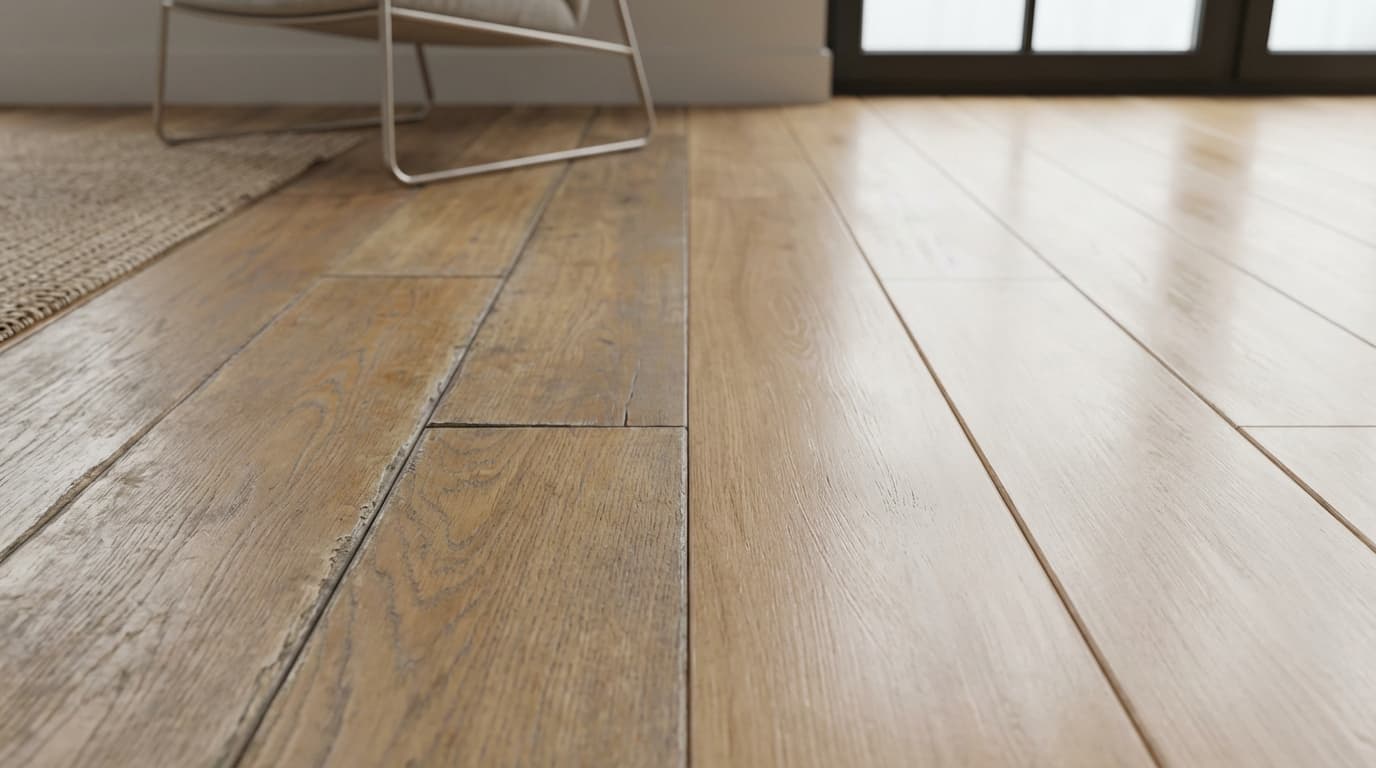
Buff and coat—also called screen and recoat—is a method to refresh dull hardwood floors by lightly abrading the existing finish and applying a new topcoat. It's a surface-level renewal that skips the heavy sanding of full refinishing, which is why most jobs wrap up in a single day.
This guide covers how the process works, when buff and coat makes sense versus full refinishing, what to expect on cost and timing, and how to tell if your floors qualify.
What Is Buff and Coat for Hardwood Floors
Buff and coat is a way to refresh dull hardwood floors by lightly scuffing the existing finish and applying a fresh topcoat. You'll also hear it called "screen and recoat"—same process, just a different name in the industry.
Here's the key distinction: buff and coat only touches the surface finish. The wood underneath stays completely untouched. That's what makes it faster and less invasive than full refinishing.
This approach works well when your floors have minor scratches, scuffs, or that worn-out look that comes from years of foot traffic. If the wood itself is still in good shape but the protective layer on top has seen better days, buff and coat can bring back the shine—typically in just one day.
Buff and Coat vs Full Hardwood Floor Refinishing
The difference comes down to how deep the work goes.
| Factor | Buff and Coat | Full Sand and Refinish |
|---|---|---|
| What it does | Refreshes the surface finish | Sands down to bare wood |
| Best for | Minor scratches, dullness, scuffs | Deep damage, color change, worn wood |
| Timeframe | Typically one day | Multiple days |
| Dust level | Minimal | Significant |
| Cost | Lower | Higher |
Full refinishing involves sanding through the existing finish and into the wood grain. That's the right call when you're dealing with deep gouges, water damage, or when you want to change the stain color entirely.
Buff and coat, on the other hand, stays at the surface level. The buffer lightly abrades the old finish so a new coat can bond on top. Your wood never gets touched.
Benefits of Buffing and Recoating Hardwood Floors
Completed in One Day
Most buff and coat jobs wrap up in a single day. You're not stepping over equipment for a week or relocating your family while work drags on.
Minimal Dust and Mess
Modern buffing equipment uses dustless or low-dust systems. Pair that with water-based finishes that have low VOCs (volatile organic compounds), and you're looking at a much cleaner process than traditional sanding.
Lower Cost Than Full Refinishing
Because the work is less intensive, buff and coat typically runs about half what full refinishing costs. Less labor, fewer materials, faster timeline—all of that adds up to savings.
Extends the Life of Your Floors
Think of buff and coat as preventive maintenance. A fresh topcoat every few years protects the wood underneath and pushes back the date when you'll eventually need full refinishing.
When to Buff and Coat Your Hardwood Floors
Timing matters here. Buff and coat works best when:
- The wood is still in good shape: Solid underneath, but the topcoat looks worn, dull, or lightly scratched
- Damage stays at the surface: Fine scratches and scuffs that haven't cut into the wood itself
- You're on a maintenance schedule: Every 3-5 years for floors with average foot traffic
If you're starting to notice traffic patterns in your hallways or the finish has lost its luster in high-use areas, that's usually the right window to act.
Can You Buff and Coat Any Hardwood Floor
Not every floor qualifies. Some situations call for a different approach entirely.
Floors That Qualify for Buff and Coat
Your floors are good candidates if they have:
- An intact polyurethane finish with no bare wood showing through
- Only surface-level scratches that haven't penetrated into the wood
- Consistent finish across the entire floor without worn-through spots
- No previous wax or acrylic treatments
Floors That Need Full Refinishing Instead
Buff and coat won't solve deeper problems. Full refinishing is the better path when you're dealing with:
- Deep gouges or scratches that reach the wood grain
- Worn-through finish exposing bare wood in traffic areas
- Water damage or pet stains that have soaked into the wood
- Severe discoloration from years of UV exposure
How Wax and Acrylic Buildup Affects Buff and Coat
Here's something that catches a lot of homeowners off guard: floors treated with wax or acrylic products often can't accept a new polyurethane coat. The chemistry just doesn't work—the new finish won't bond properly to what's already there.
Certain cleaning products leave behind wax or acrylic residue over time. If your floors have that buildup, stripping comes first before any recoating can happen. A professional assessment identifies whether buildup is present and what removal process makes sense.
Signs Your Floor Needs Buff and Coat Instead of Refinishing
A few visual cues help you figure out which service fits your situation:
- Dull appearance without bare wood: The finish looks tired, but you don't see raw wood anywhere
- Surface scratches and scuffs: Marks that catch the light but don't feel deep when you run your hand over them
- Traffic patterns in high-use areas: Hallways and entryways showing wear while the rest of the floor looks fine
- Healthy wood grain underneath: The finish is worn, but the wood itself appears solid
If you're seeing bare wood, deep scratches, or significant color changes, full refinishing is likely the better option.
Tip: Get down at floor level and look across the surface with light hitting it at an angle. This reveals scratches and wear patterns you'd miss while standing up.
How to Buff and Recoat Hardwood Floors Step by Step
While some homeowners tackle this as a DIY project, professional equipment and technique deliver more consistent results across a full room. Here's what the process looks like:
1. Floor Inspection and Deep Cleaning
The process starts with a thorough cleaning to remove dirt, residue, and oils. Any contamination left behind can prevent the new finish from bonding the way it's supposed to.
During this stage, a professional also confirms whether the floor actually qualifies for buff and coat. Sometimes what looks like surface wear turns out to be deeper damage that calls for full refinishing instead.
2. Buffing the Floor Surface
Next comes the buffing step, also called screening. A floor buffer fitted with a mesh sanding screen or abrasive pad moves across the floor, lightly scuffing the existing finish. This creates tiny scratches that give the new coat something to grip.
After buffing, deep vacuuming removes every dust particle. Even small amounts of dust trapped under the new finish create visible imperfections once everything dries.
3. Applying the New Finish Coat
Finally, one or two coats of waterborne polyurethane go down using a T-bar applicator. You can typically choose your preferred sheen level—matte, satin, semi-gloss, or high gloss depending on the look you want.
The finish then needs time to dry and cure before the floor can handle normal activity again.
How Long Does Buff and Coat Take
The work itself—inspection, cleaning, buffing, and coating—typically wraps up in one day.
Drying time adds a few hours before light foot traffic is safe. Moving furniture back usually waits 24-48 hours, depending on the specific finish used and humidity levels in your home. Your floor professional can give you exact timing based on your situation.
How Much Does Buff and Coat Cost for Hardwood Floors
Cost depends on square footage and floor condition, so every project looks a little different.
What you can generally expect: buff and coat runs about half the cost of full refinishing. You're paying for less labor, fewer materials, and a faster timeline.
The best way to get an accurate number is a written estimate based on your specific floors. OneDayFinish provides free estimates with no hidden fees—the price quoted is the price you pay.
How to Choose a Buff and Coat Professional
Not all floor service providers deliver the same experience. A few things worth looking for:
Licensed and Insured
For any work happening inside your home, licensing and insurance protect you if something goes wrong. Ask about liability coverage and whether technicians are background-checked before they enter your space.
Clear Pricing and Written Estimates
Vague pricing often leads to surprise charges at the end of a project. Look for providers who offer free, written estimates before work begins—with the final price locked in upfront so you know exactly what you're paying.
Workmanship Warranty and Satisfaction Guarantee
Reputable providers stand behind their work. A workmanship warranty and satisfaction guarantee mean you're not left fixing problems on your own if something doesn't turn out right.
Get Your Floors Buffed and Recoated in One Day
Buff and coat offers Denver homeowners a faster, cleaner, more affordable way to refresh hardwood floors. One day of work. Minimal dust. Clear pricing from the start.
OneDayFinish completes most buff and coat projects in a single day using dustless systems and upfront written estimates. Licensed, insured, and backed by a 100% satisfaction guarantee.
No pressure.
FAQs About Buff and Coat for Hardwood Floors
Can you buff hardwood floors by hand without professional equipment?
Hand buffing is technically possible for very small areas, but professional equipment delivers consistent results across full rooms and ensures proper finish adhesion. For anything larger than a closet, professional-grade buffers make a noticeable difference.
What sheen options are available after a buff and coat service?
Common options include matte, satin, semi-gloss, and gloss finishes. Matte and satin tend to hide imperfections better, while semi-gloss and gloss show more reflection and highlight the wood grain.
How soon can you walk on hardwood floors after buff and coat?
Light foot traffic in socks is typically safe after a few hours. Moving furniture back usually waits 24-48 hours to allow full curing, though exact timing depends on the finish used and your home's humidity.
Can you buff and coat engineered hardwood floors?
Engineered hardwood with a thick enough wear layer can typically be buffed and recoated. The wear layer is the solid wood veneer on top—if it's thick enough to handle light abrasion, buff and coat works. A professional assessment confirms whether your specific floors qualify.
Can you buff hardwood floors without refinishing them completely?
Yes—that's exactly what buff and coat does. It refreshes the protective finish layer without sanding down to bare wood, which is why the process is faster, cleaner, and less expensive than full refinishing.