Hardwood Floor Screening: The Low-Dust Alternative to Sanding
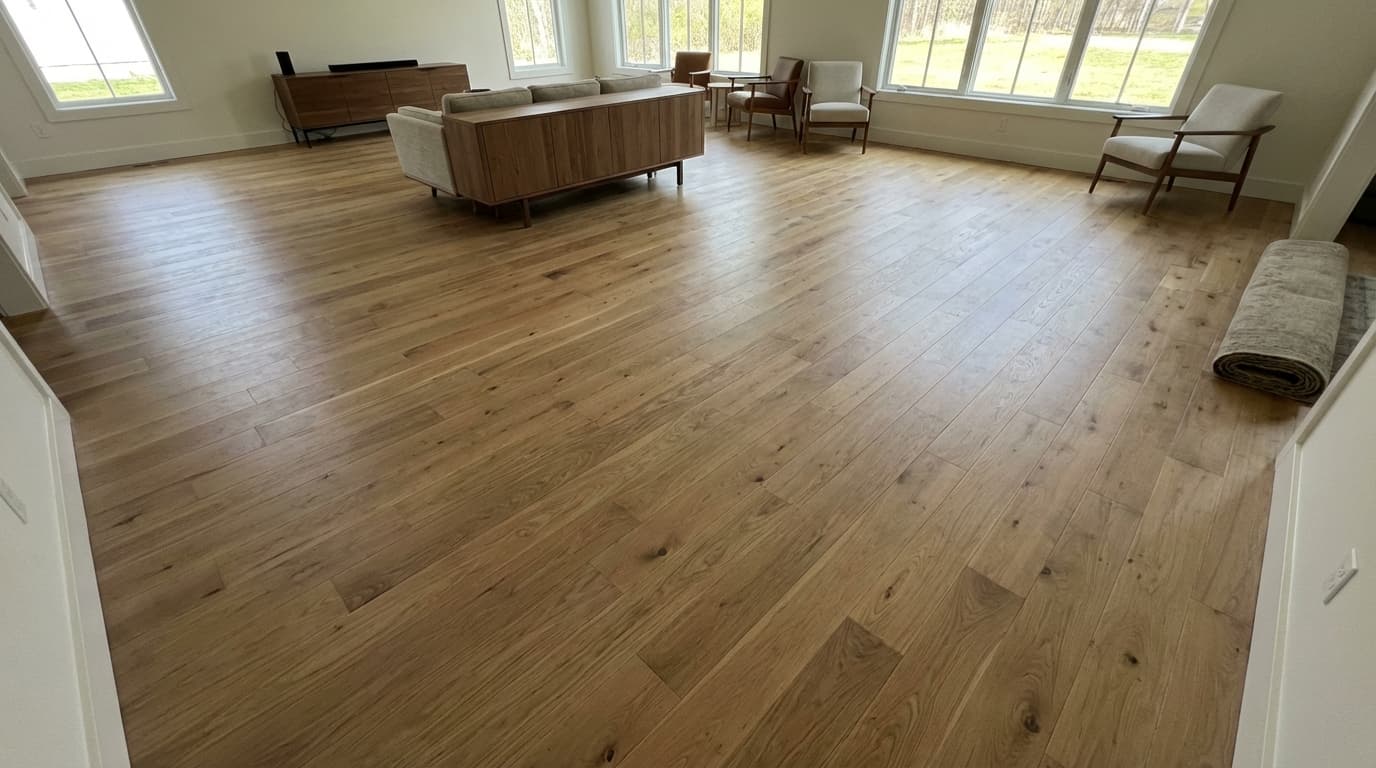
Screening is a light maintenance process that refreshes hardwood floors by abrading only the top finish layer—not the wood itself—so a new coat of polyurethane can bond and restore that like-new shine. It's faster, cleaner, and about half the cost of full sanding and refinishing.
For Denver homeowners dealing with dull or lightly scratched floors, screening often delivers the results you want without the dust cloud and multi-day disruption. Below, you'll find how the process works, when it's the right choice, and what to expect from start to finish.
What is hardwood floor screening
Screening is a light maintenance process that abrades only the top layer of your floor's finish using a floor buffer fitted with a mesh screen. The process removes minor scratches and dullness so a fresh coat of polyurethane can bond properly—all without sanding down to bare wood. You might hear it called buffing, scuff-sanding, or screen and recoat. Same process, different names.
Here's the key distinction: screening touches only the finish layer, not the wood underneath. That's why it produces so much less dust than traditional sanding and why most jobs wrap up in a single day.
- Light abrasion: A mesh screen attached to a floor buffer scuffs the existing finish just enough to create grip for the new coat
- Recoating: One or more layers of polyurethane go over the abraded surface for protection and shine
- Also called: Buffing, scuff-sanding, screen and recoat, buff and coat
Now, screening won't fix everything. Deep scratches that reach the wood, gouges, or water stains require full sanding and refinishing. And if you want to change your floor's stain color, screening isn't the right path either. But for floors with surface-level wear and a dull appearance, screening restores that like-new look without the mess and expense of starting from scratch.
How the screening process works
The process is straightforward. Most jobs complete in one day, which means you wake up with tired-looking floors and go to bed with refreshed ones.
1. Surface cleaning and preparation
Before any screening begins, your floors get a thorough cleaning. Dirt, dust, and debris all have to go because even small particles can interfere with the screening process or get trapped under the new finish. Clean floors mean better adhesion and a smoother final result.
2. Screening with a floor screener
A floor screener is simply a floor buffer fitted with a light-grit mesh screen, typically around 120-grit. The technician runs this across your floor to lightly abrade the existing finish, creating a slightly roughened surface that new polyurethane can grip.
This step produces far less dust than traditional sanding. You're scuffing the finish, not grinding into the wood, so there's no cloud of fine wood particles settling on every surface in your home.
3. Applying a fresh coat of finish
Once screening is complete, one or more coats of polyurethane go on. You can choose between water-based or oil-based finishes, and you'll pick your preferred sheen. Options typically include matte, satin, semi-gloss, or high-gloss. The new finish bonds to the abraded surface and restores your floor's protection and luster.
Water-based finishes dry faster and have less odor. Oil-based finishes take longer to cure but often provide a warmer, amber tone. Your technician can walk you through the trade-offs based on your specific situation.
Screening vs. sanding hardwood floors
Both screening and sanding restore hardwood floors, but they're designed for different situations. Understanding the difference helps you figure out which service your floors actually require.
| Factor | Screening | Full Sanding |
|---|---|---|
| Dust level | Minimal | Significant |
| Time required | Usually one day | Multiple days |
| Cost | Lower | Higher |
| Best for | Light wear, dullness | Deep damage, color change |
Dust and mess comparison
Screening produces far less dust because you're only abrading the finish layer, not the wood itself. With full sanding, technicians grind through the finish and into the wood, generating fine particles that can settle throughout your home for days.
For families with allergies, respiratory sensitivities, or simply a low tolerance for mess, the dust difference is significant. Screening keeps your home cleaner throughout the process.
Time and disruption differences
A typical screening job completes in one day. Full sanding and refinishing, on the other hand, often takes three to five days. Multiple sanding passes, stain application, and several coats of finish all require drying time between steps.
That time difference translates directly to disruption. With screening, you're back to normal by evening. With full refinishing, you might be tiptoeing around wet floors and avoiding certain rooms for nearly a week.
Cost comparison
Screening typically costs about half of what full refinishing runs. The process is less labor-intensive, uses fewer materials, and doesn't require extended drying times between multiple sanding passes.
For floors that don't require deep restoration, screening delivers renewed protection without the full refinishing price tag. It's the cost-effective choice when your floors qualify.
When to choose each method
The condition of your floors determines which approach makes sense:
- Choose screening if: Your floors have light surface scratches, scuffs, or a dull appearance but no deep gouges or worn-to-bare-wood spots
- Choose full sanding if: Your floors have deep scratches, dents, water stains, or the finish has worn completely through to the wood
If you're unsure which category your floors fall into, a professional assessment can tell you in minutes. Most companies offer free estimates, so you can get a clear answer without any commitment.
Benefits of screening hardwood floors
Screening offers several advantages over full refinishing for floors with surface-level wear. Here's what makes it appealing for many Denver homeowners.
Minimal dust and cleaner process
Because screening only touches the finish layer, dust stays minimal throughout the job. Professional technicians clean as they go and leave your space spotless when they're done.
You won't spend the next week wiping down surfaces or finding dust in unexpected places. The process is contained, and cleanup happens before the crew leaves.
Faster completion in one day
Most screening jobs finish in a single day. That speed matters when you're trying to keep your household running normally.
You don't have to relocate furniture for days, avoid entire sections of your home, or explain to kids why they can't walk through the living room. One day, and it's done.
Lower cost than full refinishing
Screening runs roughly half the cost of full refinishing. You're paying for less labor, fewer materials, and a faster process overall.
For floors that don't require deep restoration, that cost difference is meaningful. You get renewed protection and a refreshed appearance without the larger investment.
Extends the life of your existing finish
Regular screening protects the wood underneath and delays the need for expensive full refinishing. Think of it as preventive maintenance.
When you address surface wear before it becomes deep damage, you avoid the more invasive and costly restoration down the road. Screening every few years can add significant life to your floors.
When screening works best for your floors
Screening is ideal for certain floor conditions, though not all floors qualify. Here's how to tell if your floors are good candidates.
Floors that qualify for screening
Your floors are likely good candidates if they have:
- A dull but intact finish
- Light surface scratches from everyday wear
- Minor scuffs from furniture or foot traffic
- No previous wax or acrylic treatments
The finish layer is the key factor. If it's still intact—just worn and dull—screening can restore it. If the finish has worn through to bare wood in spots, you're looking at full refinishing territory.
Signs your floors need more than screening
Screening won't help if your floors have:
- Deep gouges or scratches that reach the wood
- Worn-to-bare-wood spots in high-traffic areas
- Water stains or pet damage that has penetrated the wood
- A stain color you want to change
In any of those situations, full sanding and refinishing is the appropriate path. Screening simply can't address damage that goes beyond the finish layer.
Floors with wax or acrylic buildup
Here's an important detail that catches some homeowners off guard: if your floors have been treated with wax or acrylic products over the years, screening alone won't work. The new finish won't adhere properly to those old layers.
The wax or acrylic has to come off first through a separate removal process. Once that's done, your floors can be screened and recoated successfully. A professional can assess whether your floors have this buildup during an estimate.
How much does screening hardwood floors cost
Cost varies based on square footage, floor condition, and the type of finish you choose. As a general benchmark, screening typically runs about half the cost of full refinishing.
The best way to know your actual cost is to get a written estimate. A professional can assess your specific floors and give you an exact number. No guessing, no surprises at the end.
Tip: Look for companies that provide free, written estimates with no hidden fees. The price quoted is what you pay.
How long does hardwood floor screening take
Most screening jobs complete in one day. A typical project follows this timeline: technicians arrive in the morning, screen and clean your floors, apply the new finish, and complete cleanup before leaving.
Drying time depends on the finish type. Water-based polyurethane often allows light foot traffic within a few hours. Oil-based finishes require 24 hours or more before walking on them. Your technician will give you specific guidance based on the products used.
The one-day timeline is one of screening's biggest advantages. Your floors go from scuffed to stunning without the multi-day disruption that comes with full refinishing.
How often should you screen your hardwood floors
Screening frequency depends on foot traffic and wear patterns in your home. High-traffic areas like hallways, kitchens, and entryways may benefit from screening every three to five years. Lower-traffic rooms can often go longer between treatments.
The key is to screen before the finish wears through to bare wood. Once that happens, you're looking at full refinishing instead of a simple screen and recoat.
Watch for signs of wear: dullness that doesn't improve with cleaning, light scratches accumulating in traffic paths, or areas where the finish looks thin. Addressing surface wear early keeps maintenance costs lower over time and extends your floor's overall life.
Get a professional screen and recoat in Denver
If your hardwood floors look dull or scratched but the wood underneath is still in good shape, screening might be exactly what they need. One day, minimal dust, and your floors go from scuffed to stunning.
Ready to see what your floors could look like?
Free estimates within 24 hours. Appointments usually available within 7 days. Call or text anytime. No pressure.
- Licensed and insured with $2M liability coverage
- Background-checked technicians
- 100% satisfaction guarantee
- Family-owned, serving Denver Metro for 10+ years
FAQs about screening hardwood floors
Can engineered hardwood floors be screened?
Yes, engineered hardwood with a thick enough wear layer can be screened. The wear layer is the top veneer of real wood on an engineered plank. If it's thick enough to withstand light abrasion, screening works well. A professional can assess whether your engineered floors are suitable during a free estimate.
How soon can you walk on floors after screening?
Walk time depends on the finish type. Water-based finishes typically allow light foot traffic within a few hours, while oil-based finishes require 24 hours or more. Your technician will give you specific timing based on the products used and conditions in your home.
What sheen options are available after a screen and recoat?
You can choose from matte, satin, semi-gloss, or high-gloss finishes when recoating. Matte and satin hide imperfections better and show less dust between cleanings. Semi-gloss and high-gloss reflect more light and create a more formal appearance. Each creates a different look, and your technician can help you decide based on your style and how you use the space.
Does Denver's dry climate affect hardwood floor screening?
Denver's low humidity can actually speed up drying times, which is often an advantage for scheduling. However, dry conditions also mean floors may show wear faster as the finish gets stressed by humidity fluctuations. Regular screening helps maintain that protective finish layer and keeps your floors looking their best in Colorado's unique climate.