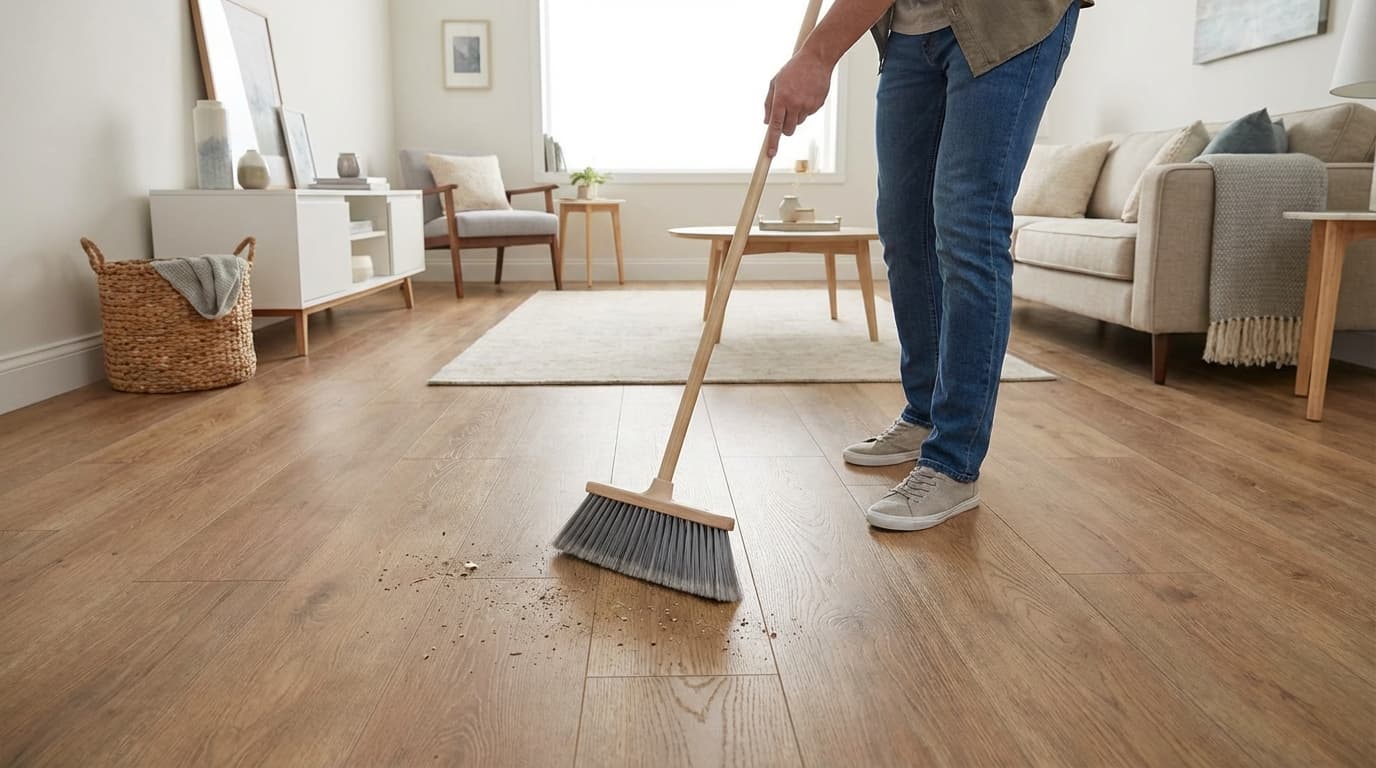
Engineered hardwood floors look stunning until they don't—and the wrong cleaning method can make things worse fast. Unlike solid hardwood, engineered floors have a layered construction that's more vulnerable to moisture damage, which means your tile-cleaning habits won't work here.
This guide covers the right way to clean engineered hardwood step by step, the best products to use (and which ones to avoid), how to handle stains, and when it makes sense to call in a professional.
How to clean engineered hardwood floors step by step
Clean engineered hardwood floors by sweeping or vacuuming first, then damp mopping with a pH-neutral cleaner. The mop stays barely damp—not wet—because engineered wood has layers that absorb moisture faster than solid hardwood. That layered construction is what makes engineered floors more affordable and stable, but it also means water is your biggest enemy.
A pH-neutral cleaner sits right in the middle of the acidity scale, around 7. Products at this level won't eat away at your floor's protective finish the way acidic cleaners like vinegar will over time.
1. Remove loose dirt with a microfiber mop or vacuum
Dirt and grit act like sandpaper under your feet. Every step grinds those particles into the finish, leaving tiny scratches that add up fast.
If you're vacuuming, turn off the beater bar or switch to hard floor mode. The beater bar is that spinning brush designed to agitate carpet fibers—on wood floors, it just whips debris around and can scratch the surface.
2. Prepare a pH-neutral cleaning solution
You can go with a store-bought hardwood cleaner like Bona, or mix your own with about a teaspoon of mild dish soap in a gallon of warm water. Both work fine.
Here's the thing about homemade solutions: more soap doesn't mean cleaner floors. Extra soap leaves a film that actually attracts more dirt. Keep it light.
3. Damp mop in the direction of the wood grain
Wring out your mop until it feels almost dry. You want just enough moisture to pick up dirt, not enough to leave puddles.
Work in small sections and follow the direction of the wood grain. Going with the grain prevents streaks and keeps dirt from settling into the natural lines of the wood.
4. Dry the floor immediately to prevent water damage
Even a well-wrung mop leaves some moisture behind. Follow up with a dry microfiber cloth right away.
Water sitting on engineered floors—even for a few minutes—can seep into the seams between planks. Once moisture gets in there, you're looking at warping, swelling, or delamination, which is when the layers of the wood start separating from each other. None of that is fixable with cleaning.
Best cleaners for engineered hardwood floors
Not every wood floor cleaner works well on engineered hardwood. Some products contain oils or waxes that build up on the polyurethane finish most engineered floors have, leaving a hazy or sticky surface over time.
Store-bought engineered wood floor cleaners
A few reliable options:
- Bona Hardwood Floor Cleaner: pH-neutral, dries without residue, available at most hardware stores
- Bruce Hardwood Floor Cleaner: Made by a flooring manufacturer, safe for sealed wood surfaces
- Method Wood Floor Cleaner: Plant-based formula that works on engineered and laminate
Check your flooring manufacturer's care guide first. Some warranties require specific products, and using the wrong cleaner could void your coverage.
Homemade cleaners for engineered hardwood
Water with a few drops of mild dish soap handles routine cleaning just fine. The key is using it sparingly and drying thoroughly afterward.
You'll see vinegar recommended all over the internet, but it's worth skipping. Vinegar is acidic, and while it won't destroy your floors overnight, it gradually dulls the polyurethane finish. The damage is subtle—you might not notice for a year or two—but it adds up.
Essential supplies for cleaning engineered wood floors
The right tools make the job faster and protect your floors from accidental damage:
- Microfiber mop: Traps dirt instead of pushing it around, gentle on finishes
- Soft-bristle broom or dust mop: Good for quick daily sweeping
- Vacuum with hard floor setting: Picks up fine particles without scratching
- Spray bottle: Lets you control exactly how much cleaner hits the floor
- Dry microfiber cloths: For drying after mopping and handling spills
What to avoid when cleaning engineered hardwood floors
Some cleaning methods that work great on tile or laminate can seriously damage engineered wood:
- Steam mops: The combination of heat and moisture forces water into seams and causes delamination
- Excessive water: Standing water leads to swelling, cupping, and warped planks
- Vinegar and ammonia: Acidic and alkaline products strip the protective finish over time
- Oil soaps and wax-based cleaners: Leave residue that attracts dirt and prevents recoating later
- Abrasive tools: Steel wool and stiff brushes scratch right through the finish layer
Tip: If a product promises to "shine" or "polish" your floors, check the ingredients. Many contain wax or silicone that builds up and creates problems down the road.
How to deep clean engineered hardwood floors
Regular mopping handles everyday dirt, but sometimes floors need more intensive cleaning. You'll know it's time when your usual routine stops restoring the shine, or when you notice a hazy film that won't wipe away.
Deep cleaning typically involves machine scrubbing with commercial-grade equipment and fast-drying detergents that most homeowners don't have access to. For floors with significant buildup, professional cleaning is often the safer route—aggressive DIY methods with too much moisture can cause more damage than the dirt itself.
How to remove stains from engineered hardwood floors
The faster you address a spill, the better your chances of avoiding a permanent mark. Liquids that sit on the surface eventually work their way into seams and grain.
Food and beverage stains
Wipe up spills immediately with a slightly damp cloth. For dried-on food, apply a small amount of pH-neutral cleaner, let it sit for about a minute, then wipe gently.
Scrubbing hard won't help—you'll damage the finish before you remove the stain.
Pet stains and odors
Blot pet accidents right away. Rubbing spreads the liquid and pushes it deeper into the seams between planks.
For lingering odors, enzymatic cleaners designed for hardwood break down the organic compounds causing the smell. If urine has soaked through to the subfloor, the affected boards may require professional treatment or replacement.
Scuff marks and heel marks
A clean tennis ball or dry microfiber cloth often buffs out light scuffs with a little pressure. For stubborn marks, a paste of baking soda and water works, though you'll want to use it sparingly and wipe it away quickly since baking soda is mildly abrasive.
Sticky residue and product buildup
If your floors feel tacky or look yellowed, you're probably dealing with wax or acrylic buildup from using the wrong cleaning products over time. Regular cleaning won't fix this problem.
Removing built-up wax or acrylic requires professional stripping before the floor can be properly cleaned or recoated. OneDayFinish offers acrylic and wax removal services that restore the original surface and prepare floors for a fresh finish.
Engineered hardwood floor maintenance and care tips
Prevention saves you from bigger problems later. A few simple habits keep your floors looking better for years:
- Felt pads under furniture: Prevents scratches when chairs and tables shift
- Doormats at entrances: Traps dirt and moisture before it reaches your floors
- Immediate spill cleanup: Stops moisture from seeping into seams
- Regular pet nail trimming: Reduces scratch risk from daily activity
- Consistent indoor humidity: Keeps wood from expanding and contracting excessively (40-60% is the sweet spot)
| Task | How Often |
|---|---|
| Sweep or dust mop | Daily in high-traffic areas |
| Vacuum | 2-3 times per week |
| Damp mop | Weekly or as needed |
| Deep clean | Every 1-2 years |
| Professional inspection | Every 3-5 years |
When to hire a professional for engineered hardwood floor cleaning
Some situations call for equipment and expertise that goes beyond what's available at the hardware store. Attempting aggressive cleaning on problem floors often makes things worse.
Signs your floors need professional cleaning
A few indicators that it's time to call in help:
- Dull appearance that doesn't improve with regular cleaning
- Sticky or tacky surface from product buildup
- Visible scratches and wear patterns throughout
- Discoloration or yellowing that won't wipe away
- Preparing to sell your home and wanting maximum visual impact
What professional engineered hardwood cleaning includes
Professional cleaning uses commercial-grade equipment with specialized detergents that remove deep-set dirt without moisture damage. The process typically takes just a few hours for an average-sized home.
OneDayFinish's Revival Process uses pH-neutral products and methods that protect your finish while restoring the floor's original appearance. Most jobs wrap up in one day, and the service includes full cleanup. We're licensed, insured, and background-checked, with a 100% satisfaction guarantee.
Restore your engineered hardwood floors in one day
When regular cleaning isn't cutting it anymore, professional restoration brings back the shine without turning your home into a construction zone. OneDayFinish provides free estimates within 24 hours, transparent pricing with no hidden fees, and we show up when we say we will.
No pressure.
FAQs about cleaning engineered hardwood floors
Can you use a steam mop on engineered hardwood floors?
No. Steam mops force heat and moisture into the seams between planks, causing delamination and warping even on sealed surfaces. The damage often doesn't show up immediately but appears months later as boards start to separate or buckle.
Is Swiffer safe for engineered hardwood floors?
Swiffer dry cloths work well for picking up dust. The WetJet can be used occasionally if the solution is pH-neutral, though many flooring professionals recommend dedicated hardwood cleaners instead for regular use.
How often should you clean engineered hardwood floors?
Sweep or vacuum high-traffic areas daily. Damp mop weekly or as needed based on your household—homes with kids and pets typically require more frequent cleaning than quieter households.
Can engineered hardwood floors be refinished?
Most engineered floors can be refinished once or twice, depending on the thickness of the wear layer (the solid wood top layer). A professional can measure this and advise whether refinishing or recoating makes more sense for your specific floors.
How do you clean engineered hardwood floors without leaving streaks?
Use a barely-damp microfiber mop, wipe in the direction of the wood grain, and dry immediately. Streaks usually come from too much water, too much cleaner, or products that leave residue behind.
What is the difference between cleaning engineered hardwood and solid hardwood floors?
The cleaning method is similar, but engineered hardwood is more sensitive to moisture because of its layered construction. Use less water than you would on solid hardwood, and dry more quickly after mopping.
Ready to get started?
Schedule your free estimate today.
(720) 730-8764 Get Free Estimate
Call now for a free phone estimate
- Free estimates, no obligation
- Licensed, insured, background-checked
- 100% satisfaction guaranteed
Mon–Fri: 8 am – 5 pm · Sat: 8 am – 12 pm · Sun: Closed