Dustless Floor Refinishing: The Clean Alternative for Your Home
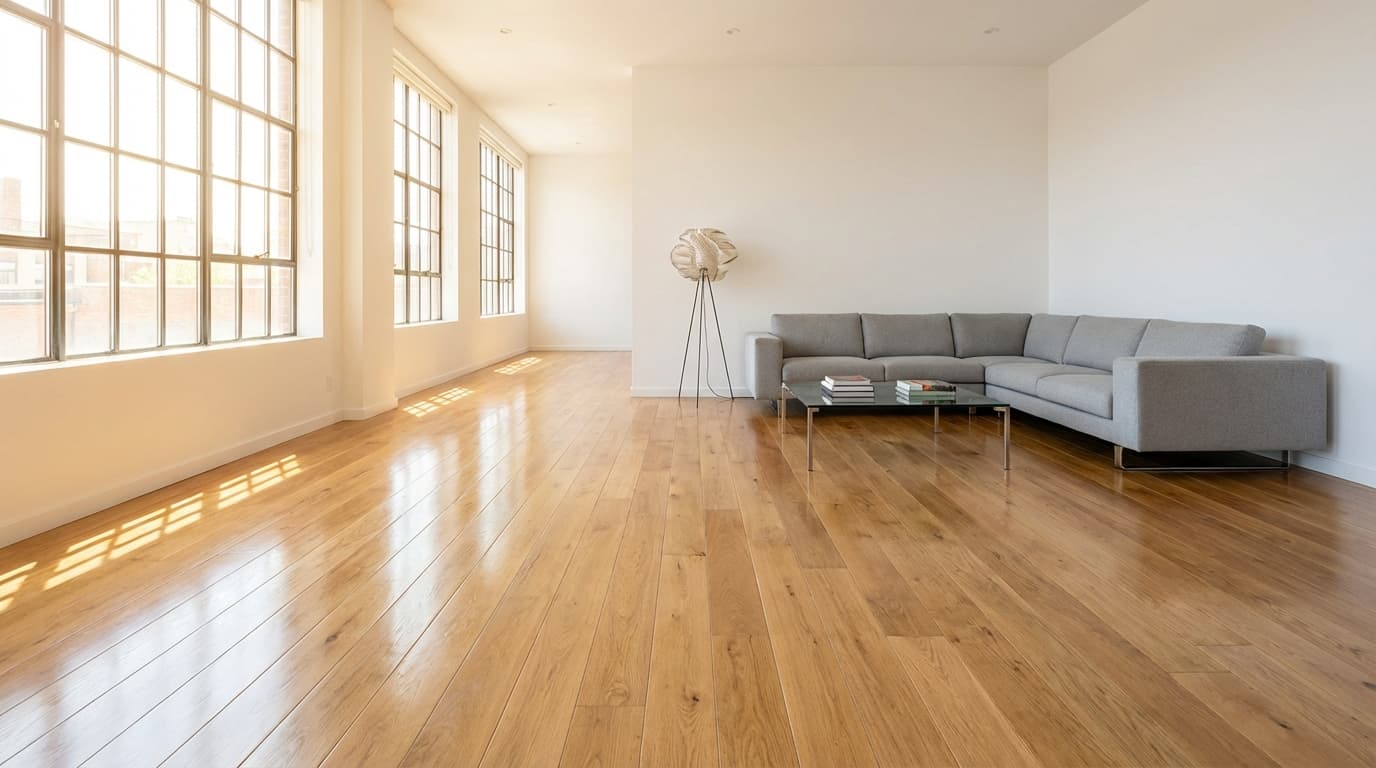
Traditional floor refinishing leaves your home coated in fine wood dust for days—on furniture, in air ducts, on every surface you own. Dustless refinishing eliminates that problem by capturing particles at the source while the sanding happens.
This guide covers how the dustless process works, which floors qualify, how costs compare to traditional methods, and what to expect when you book a project.
What Is Dustless Floor Refinishing
Dustless floor refinishing is a modern hardwood restoration method that uses specialized sanding equipment connected to powerful vacuum systems. The vacuums capture wood dust at the source—right where the sander meets the floor—so particles never become airborne in your home.
Traditional floor sanding, by contrast, creates fine wood dust that spreads everywhere. It settles on furniture, gets into air ducts, coats kitchen counters, and lingers for days after the crew leaves. You've probably heard the stories from neighbors or seen photos online. The mess is legendary.
With dustless refinishing, that problem largely disappears. The equipment pulls dust directly into containment systems as it's created, which means your home stays clean throughout the project. Most jobs wrap up in a single day, and you won't spend the following week wiping down every surface in your house.
How Dustless Hardwood Floor Refinishing Works
The process moves quickly once the crew arrives. From start to finish, most projects take just one day—a timeline that surprises homeowners who've dealt with traditional refinishing before.
Dust Containment Equipment and HEPA Filtration
The sanding machines connect directly to industrial vacuums equipped with HEPA filters. HEPA stands for High-Efficiency Particulate Air, and filters with this certification trap 99.97% of particles down to 0.3 microns. For context, wood dust particles typically range from 1 to 100 microns, so HEPA filtration catches virtually all of them.
The vacuum runs continuously while the sander operates. Dust travels through a hose into the filtration system before it ever has a chance to float into your living space. Some systems also include secondary containment bags for extra protection.
Surface Screening and Preparation
Here's where dustless refinishing differs from traditional sanding. Instead of grinding down to bare wood, the technician "screens" the floor. Screening uses a fine abrasive pad to lightly scuff the existing finish—just enough to create texture for the new coat to grip.
Think of it like sanding a piece of furniture before painting. You're not removing material; you're creating tiny scratches that help the new finish bond properly. This approach preserves your floor's thickness, which matters especially in older homes where the hardwood may have been sanded several times already.
The screening process also removes light surface scratches and evens out minor wear patterns. Deeper damage requires a different approach, which we'll cover later.
Fresh Finish Application
After screening, the floor gets a thorough cleaning to remove any remaining dust or debris. Then comes the new finish—typically a professional-grade polyurethane that provides both shine and protection.
You can choose your sheen level based on personal preference:
- Matte: Very low shine, hides imperfections well, popular in modern homes
- Satin: Slight sheen, the most common choice, balances appearance and practicality
- Semi-gloss: Noticeable shine, shows more reflections, easier to clean
- High-gloss: Maximum shine, dramatic look, shows dust and scratches more readily
The finish goes on in thin, even coats. Depending on the product used, you might get one coat or two during a single-day project.
Same-Day Cleanup and Completion
Because dust stays contained throughout the process, cleanup at the end is straightforward. The crew removes protective coverings, packs up equipment, and leaves your space ready to use.
Most floors can handle light foot traffic in socks within a few hours. Full cure time—when you can move furniture back and walk normally—varies by finish type, usually somewhere between 24 and 72 hours. Your technician will give you specific timing based on the products used.
Benefits of Dust-Free Wood Floor Refinishing
Faster Project Completion in One Day
Traditional refinishing typically takes three to five days. You're dealing with heavy sanding on day one, stain application on day two, then multiple finish coats with drying time between each. The house becomes a construction zone.
Dustless refinishing compresses that timeline dramatically. One day for most projects. You schedule the appointment, the crew arrives, and by evening your floors look refreshed. Life returns to normal quickly.
Cleaner Indoor Air and Healthier Home
Wood dust isn't just messy—it can trigger respiratory issues, especially for people with allergies or asthma. Fine particles float in the air for hours and settle into soft furnishings, carpets in adjacent rooms, and HVAC systems.
Dustless methods keep particles contained from the start. Your air quality stays normal throughout the project, and you won't find dust in unexpected places for weeks afterward. Families with young children or pets particularly appreciate this benefit.
Professional Results Without Heavy Sanding
The finished floor looks smooth, even, and protected. The new coat of polyurethane restores shine and provides a durable barrier against daily wear.
Because screening removes only a tiny amount of material, your hardwood retains its full thickness. This matters for long-term floor health. Every traditional sanding removes roughly 1/32 inch of wood, and most hardwood floors can only handle four or five full sandings before the wood becomes too thin. Dustless refinishing extends the life of your floors by preserving what's already there.
Minimal Disruption to Your Daily Routine
With traditional refinishing, many families move out for several days. The dust, the fumes, the wet finish—it's not compatible with normal living.
Dustless refinishing changes that calculation. The contained dust means you can often stay in your home during the work. You'll want to keep kids and pets away from the work area, and you'll avoid the freshly finished rooms until they cure. But you won't need to book a hotel or camp at a relative's house.
Dustless Refinishing vs Traditional Floor Sanding
Understanding when each method makes sense helps you choose the right approach for your floors.
| Factor | Dustless Refinishing | Traditional Sanding |
|---|---|---|
| Dust Level | Minimal, contained at source | Significant, spreads throughout home |
| Timeline | Usually one day | Three to five days |
| Wood Removal | Surface only (screening) | Down to bare wood |
| Best For | Worn finish, light scratches | Deep damage, color changes |
| Home Disruption | Low | High |
Dust and Mess Comparison
Traditional sanding produces pounds of fine wood dust per room. Even with plastic sheeting over doorways, particles find their way into other spaces. Many homeowners end up hiring duct cleaning services afterward.
Dustless systems capture dust before it escapes. The difference is dramatic—you can often see the floor being sanded without any visible dust cloud. Some particles still escape, but we're talking about a small fraction compared to traditional methods.
Project Timeline Differences
The timeline gap comes down to process differences. Traditional refinishing involves:
- Heavy sanding to remove old finish and expose bare wood
- Medium sanding to smooth the surface
- Fine sanding for final preparation
- Stain application (if changing color) plus drying time
- First coat of finish plus drying time
- Light sanding between coats
- Second coat of finish plus drying time
- Sometimes a third coat
Each step requires drying time, and you can't rush polyurethane. The process simply takes days.
Dustless refinishing skips the heavy sanding entirely. Screen, clean, coat, done. One day handles most projects.
When Traditional Sanding Is Still Necessary
Dustless refinishing works beautifully for floors with surface-level wear. However, some situations call for traditional sanding:
- Deep scratches or gouges: If damage extends below the finish into the wood itself, screening won't remove it. You'll see the scratches through the new finish.
- Pet stains: Urine soaks into wood fibers and often requires sanding down to fresh material.
- Water damage: Warped or discolored boards from water exposure typically need more aggressive treatment.
- Color changes: If you want to go from dark stain to light, or vice versa, you'll need to sand down to bare wood and start fresh.
A quick inspection can determine which approach fits your situation. If you're unsure, a professional assessment takes the guesswork out of the decision.
Which Floors Qualify for Dustless Wood Floor Refinishing
Not every floor is a candidate for dustless refinishing. The method works best under specific conditions.
Solid Hardwood Floors
Solid hardwood—oak, maple, walnut, cherry, and similar species—responds well to dustless refinishing when the existing finish is worn but the wood underneath remains sound. Surface scratches, dullness, and traffic patterns in the finish are ideal problems for this approach.
If your hardwood has deep damage, significant gaps between boards, or structural issues, you'll want a full assessment before proceeding.
Engineered Wood Floors
Engineered flooring consists of a thin hardwood veneer bonded to a plywood or fiberboard core. The veneer thickness determines whether refinishing is possible.
- Veneers 2mm or thicker: Usually safe for dustless refinishing
- Veneers under 2mm: Risk of sanding through to the core layer
Many engineered floors have veneers between 0.6mm and 2mm, which limits refinishing options. A professional can measure your veneer thickness and advise accordingly. When in doubt, ask before proceeding.
Previously Finished and Lightly Worn Surfaces
The ideal candidate for dustless refinishing is a floor that's been finished before and now shows wear. The existing finish provides the foundation—screening roughs it up, and the new coat bonds to it.
Floors that have never been finished, or floors where the finish has worn completely through to bare wood in spots, may need traditional treatment first. The screening process assumes there's an existing finish to work with.
How Much Does Dustless Floor Refinishing Cost
Pricing depends on several factors: square footage, floor condition, finish selection, and your local market. However, dustless refinishing typically costs less than traditional refinishing because the process requires less labor time and cleanup.
You're paying for one day of work instead of three to five days. The crew isn't spending hours on dust containment and post-project cleaning. Those savings often pass through to the final price.
At OneDayFinish, we provide free written estimates before any work begins. The quote includes materials, labor, and cleanup. No hidden fees, no surprise charges at the end. The price we quote is the price you pay.
Is No-Sanding Wood Floor Refinishing Worth It
For floors with surface wear and light scratches, dustless refinishing delivers excellent value. You get refreshed floors in one day, minimal disruption, and a clean home throughout the process.
The method makes particular sense when:
- Your floors look dull or worn but don't have deep damage
- You're preparing a home for sale and want quick results
- Family members have dust allergies or respiratory sensitivities
- You can't vacate your home for multiple days
- Your hardwood has been sanded before and you want to preserve thickness
Traditional sanding remains the better choice when floors have deep scratches, pet stains, water damage, or when you want to change the stain color significantly.
Get Dustless Hardwood Floor Refinishing in Denver
OneDayFinish serves the Denver metro area and surrounding communities within 30 miles. We provide free estimates within 24 hours, and most projects complete in a single day.
Every technician is licensed, insured, and background-checked. We carry $2M liability insurance and back our work with a workmanship warranty plus a 100% satisfaction guarantee. If you're not happy with the results, we'll make it right at no extra cost.
No pressure. Just honest answers about what your floors need.
FAQs About Dustless Floor Refinishing
How do I prepare my home for dustless floor refinishing?
Clear furniture, rugs, and other items from the rooms being refinished. The crew handles everything else, including protecting adjacent areas and cleaning up when the work is complete.
How soon can I walk on floors after dustless refinishing?
Light foot traffic in socks is usually fine within a few hours. Full cure time varies by finish type—typically 24 to 72 hours before you can move furniture back and resume normal activity. Your technician will provide specific timing for your project.
Can dustless refinishing fix deep scratches and pet damage?
Dustless refinishing addresses surface-level scratches and general wear effectively. Deep gouges, pet stains that have soaked into the wood, or damage that extends below the finish layer typically require traditional sanding for complete repair.
What is the difference between dustless and sandless refinishing?
Dustless refinishing uses light sanding (screening) with vacuum dust containment. Sandless refinishing skips abrasion entirely and relies on chemical cleaners or bonding agents to prepare the surface. Dustless methods generally produce better adhesion and longer-lasting results because the screening creates mechanical texture for the new finish to grip.
Ready to get started?
Schedule your free estimate today.
(720) 730-8764 Get Free Estimate
Call now for a free phone estimate
- Free estimates, no obligation
- Licensed, insured, background-checked
- 100% satisfaction guaranteed
Mon–Fri: 8 am – 5 pm · Sat: 8 am – 12 pm · Sun: Closed