Professional Hardwood Screen and Recoat Services in Denver, CO
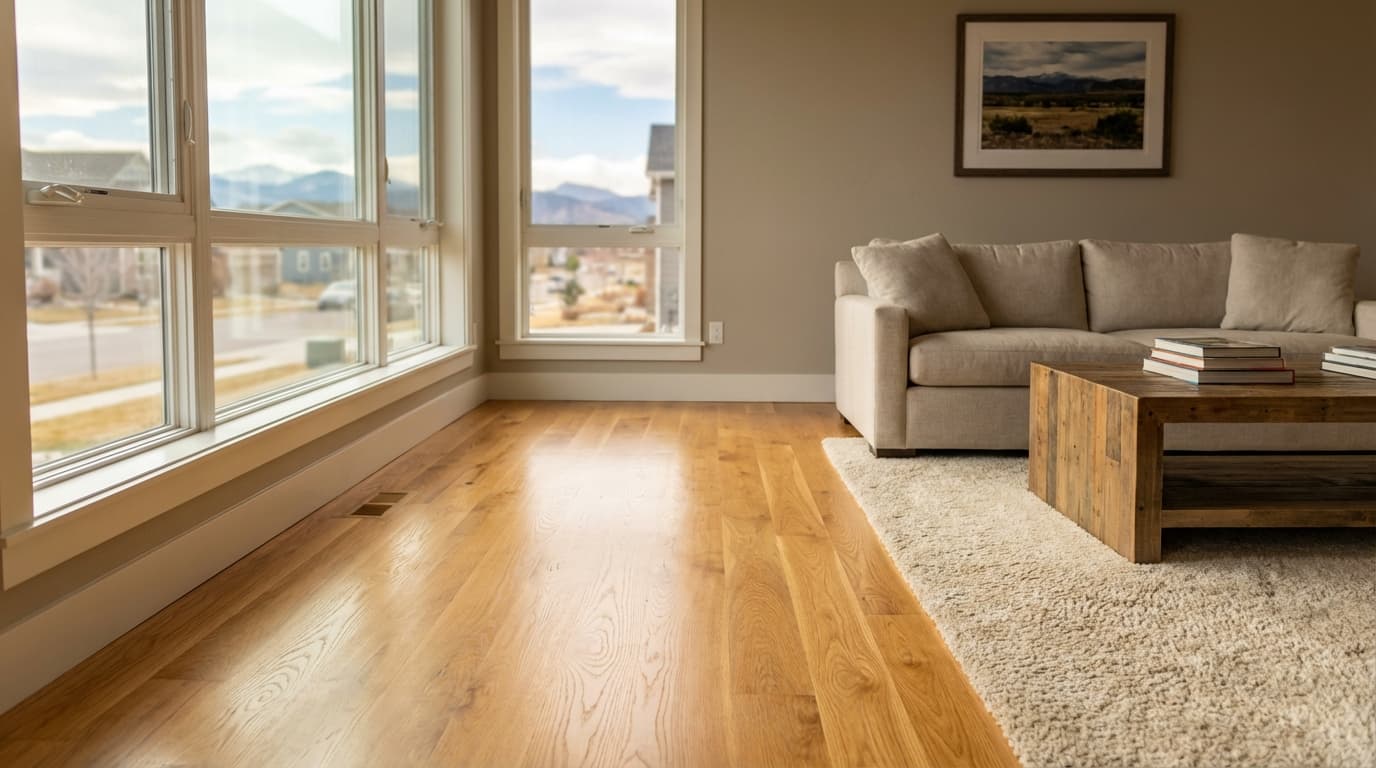
Your hardwood floors still look solid underneath, but that shine disappeared somewhere between last winter and now. Surface scratches, dull patches in the hallway, wear patterns around the kitchen—these are signs your finish is wearing thin, not that your floors need replacing.
A screen and recoat can bring back that like-new appearance in a single day, at about half the cost of full refinishing. This guide covers how the process works, what it costs in Denver, and how to tell if your floors are good candidates for this service.
What is hardwood floor screen and recoat
Screen and recoat services in Denver typically run around $2 per square foot and give you about 90% of the results of a full refinish at a fraction of the cost. The process involves lightly abrading your existing finish with a specialized screen, then applying a fresh coat of polyurethane on top. Most jobs wrap up in just one day.
Here's the key distinction: screening doesn't sand down to bare wood. Instead, it scuffs up the existing polyurethane layer just enough to let a new coat bond properly. Think of it like prepping a wall before painting—you're creating texture for the fresh layer to grip onto.
The recoating step follows right after. A new layer of polyurethane goes down across the entire floor, restoring that protective barrier and bringing back the shine you remember from when your floors were new. Because there's no heavy sanding involved, you avoid the dust storm that comes with traditional refinishing.
Signs your hardwood floors need a screen and recoat
Catching wear early saves you money down the road. A floor that only needs a screen and recoat today might require full refinishing if you wait another year or two.
Surface scratches and scuff marks
Light scratches that sit in the finish layer—not deep gouges into the wood—are exactly what screen and recoat is designed for. You'll typically spot them around furniture legs, in entryways, and along the paths your family walks every day.
Dull or faded finish
Your floors have lost their shine even though you clean them regularly. The wood underneath is probably fine, but the protective top layer has simply worn thin over time. Water might not bead up the way it used to.
Wear patterns in high-traffic areas
Hallways, kitchen paths, and the spot in front of your sink often look noticeably duller than the rest of the floor. When you can see a visible difference between high-traffic and low-traffic areas, the finish is breaking down where it matters most.
Finish that feels rough or worn
Run your hand across the floor. If it feels gritty or rough instead of smooth, the finish has lost its integrity. Another quick test: drop a few water droplets on the surface. If they soak in rather than beading up, your protective layer isn't doing its job anymore.
Screen and recoat vs full refinishing
The fundamental difference comes down to which layer you're working on. Screen and recoat addresses only the finish. Full refinishing sands the floor down to bare wood and starts fresh.
| Factor | Screen and Recoat | Full Refinishing |
|---|---|---|
| What it addresses | Surface wear, dullness, light scratches | Deep scratches, stains, wood damage |
| Time required | One day | Multiple days |
| Dust level | Minimal to dust-free | Significant dust |
| Cost | Lower investment | Higher investment |
| Disruption | Minimal | Rooms unusable for days |
When screen and recoat is the right choice
Screen and recoat works when your finish is still intact across most of the floor. If you're seeing surface-level wear but no deep scratches that go into the wood grain, this service will likely give you the results you want. The finish can be worn and dull, but it can't be worn through completely.
When full refinishing is necessary
Full refinishing becomes the answer when damage has reached the wood itself. Deep gouges you can feel with your fingernail, pet stains that have soaked in, water damage, or areas where the finish has worn completely through to bare wood—all of these situations call for sanding down and starting over.
- Deep scratches: If you can catch your fingernail in the groove, it's gone past the finish layer
- Pet stains: Urine that has soaked into wood fibers won't come out with a new coat of poly
- Water damage: Black stains or warping indicate damage that screening can't fix
- Bare wood showing: High-traffic paths where the finish is completely gone need full refinishing
How much does hardwood screen and recoat cost in Denver
Pricing depends on your total square footage, the current condition of your floors, and your finish selection. Screen and recoat typically costs significantly less than full refinishing—often about half the price or less.
A few factors can move your quote up or down:
- Square footage: Larger areas adjust the overall investment, though per-square-foot pricing often decreases with size
- Floor condition: Heavy soiling or old wax buildup may require additional prep work before screening
- Finish selection: Your choice of sheen and any premium products can influence the final number
The most accurate way to know your cost is to get a written estimate. OneDayFinish provides free quotes within 24 hours, and the price we quote is the price you pay. No hidden fees, no surprise charges at the end.
How our screen and recoat process works
A clear step-by-step approach keeps your project on schedule and your home clean throughout. Here's what to expect.
1. Free floor assessment and quote
A technician comes to your home, evaluates your floor's condition, and identifies any special preparation needs. You'll get a written quote on the spot. This assessment also confirms whether screen and recoat is the right solution or if your floors actually require a different approach.
2. Surface preparation and deep cleaning
Before any screening begins, your floors get a thorough cleaning to remove dirt, residue, and anything else that might prevent the new finish from bonding. Any debris left behind can cause adhesion problems later.
3. Professional floor screening
Using specialized equipment, the technician lightly abrades the existing finish. This scuffs the surface without damaging the wood underneath, creating the texture that allows new polyurethane to grip securely.
4. Premium polyurethane application
A fresh coat of polyurethane goes down in your chosen sheen—matte, satin, semi-gloss, or gloss. Professional application technique ensures smooth, even coverage without lap marks or bubbles.
5. Final inspection and complete cleanup
After the finish is applied, a quality check covers the entire floor. Drop cloths come up, equipment goes out, and your space is left spotless. We clean up completely—you won't find dust settling on your furniture for days afterward.
Benefits of one-day screen and recoat service
For busy Denver homeowners, getting beautiful floors without major disruption matters more than almost anything else.
Same-day results with minimal disruption
Most screen and recoat jobs wrap up in a single day. You're not losing access to rooms for an entire week or rearranging your life around a contractor's schedule. We show up when we say we will and finish when we say we will.
Dust-free floor screening process
Modern dust-containment methods keep your home clean throughout the process. You won't come home to find a fine layer of dust coating every surface in your house.
Significant cost savings over full refinishing
Screen and recoat delivers a like-new appearance at a fraction of the cost of full refinishing. You're refreshing the finish, not rebuilding the floor from scratch.
Preserves your original hardwood character
Because there's no heavy sanding, the original wood grain, patina, and unique character of your hardwood stay intact. Older floors with beautiful natural aging keep their personality rather than looking brand new.
Is your floor a good candidate for screen and recoat
A quick self-assessment can help you figure out what your floors actually need before you call for a professional opinion.
Ideal candidates for screen and recoat
- Floors with only surface-level scratches and dullness
- Finish still intact and not worn through to bare wood
- No deep stains that have penetrated into the wood
- Floors previously finished with polyurethane (not wax or oil)
- Regularly maintained floors showing normal signs of age
Floors that require full refinishing instead
- Deep scratches or gouges you can feel in the wood grain
- Pet urine stains that have soaked into the wood
- Water damage, warping, or black stains
- Heavy buildup of wax or acrylic polish
- Finish completely worn through in high-traffic paths, exposing bare wood
Not sure which category your floors fall into? A free in-home assessment takes the guesswork out of the equation. We'll tell you honestly which service your floors actually need.
Why Denver homeowners choose OneDayFinish
Choosing the right contractor makes all the difference in your experience and your results.
Licensed, insured, and background-checked technicians
Every technician is verified for your peace of mind. We carry $2M liability insurance to protect your home and property throughout the project.
Clear upfront pricing with no hidden fees
You receive a free, written estimate before any work begins. The price we quote is the price you pay—no surprise charges when the job is done. No pressure.
100% satisfaction guarantee and workmanship warranty
If you're not completely happy with the result, we make it right at no extra cost. All work is backed by a comprehensive workmanship warranty.
Local family-owned Denver business
We're your neighbors, serving the Denver metro area for over 10 years. Your home gets the same care and respect we'd give our own.
Denver metro areas we serve for screen and recoat
Service is available throughout the Denver metro area and surrounding communities within 30 miles:
- Cherry Creek, Capitol Hill, Highlands, Washington Park, Congress Park
- Denver Tech Center, Lakewood, Littleton, Aurora
- Arvada, Westminster, Boulder
Appointments are typically available within 7 days. Booking is easy by phone or text.
Get your free screen and recoat estimate today
Restore the beauty of your hardwood floors without the dust, cost, or disruption of full refinishing. Free estimates within 24 hours. No pressure, no obligation.
- Free estimates within 24 hours
- Licensed & insured with $2M coverage
- 100% satisfaction guarantee
FAQs about hardwood screen and recoat in Denver
How long does a screen and recoat finish take to cure?
Most modern polyurethane finishes allow light foot traffic within a few hours. Full cure time varies by product—typically 24 to 72 hours for normal use. Your technician will provide specific guidance based on the finish applied to your floor.
Can you screen and recoat engineered hardwood floors?
Yes, engineered hardwood with a sufficient polyurethane wear layer can typically be screened and recoated. The key factor is the thickness of that top layer. A free assessment confirms whether your engineered floors are good candidates.
How often should you screen and recoat hardwood floors?
Most hardwood floors benefit from a screen and recoat every 3 to 5 years, depending on traffic levels and how well the floors are maintained. This proactive approach extends the life of your floors and delays the need for full refinishing.
What sheen options are available for screen and recoat?
Multiple sheen levels are available to match your style and existing decor: matte, satin, semi-gloss, and gloss. Satin tends to be the most popular choice for its balance of shine and practicality.
Do I need to move furniture before screen and recoat service?
Clearing the work area of all furniture, rugs, and personal items before your appointment is recommended. Specific preparation details can be discussed during your free assessment.
How soon can screen and recoat be done after hardwood floor installation?
New hardwood floors typically need their factory finish to fully cure before screening—usually 30 to 60 days minimum. An assessment with our team can determine the appropriate timing for your specific floors.