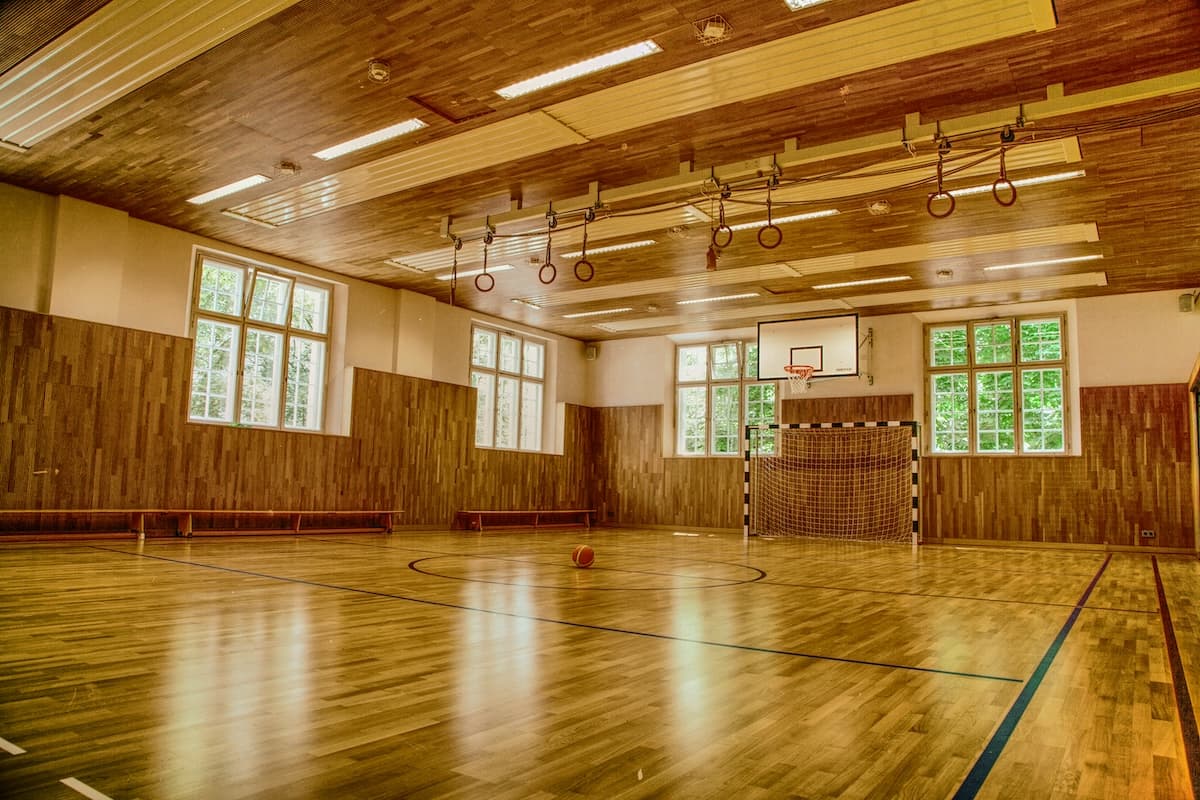
Your gym floor is starting to look dull, and you're wondering what it'll cost to bring back the shine without blowing your maintenance budget. A screen and recoat—light abrasion plus a fresh finish coat—typically runs $0.50 to $2.50 per square foot, putting most standard high school gyms in the $4,000 to $15,000 range.
This guide breaks down exactly what drives those costs, how screen and recoat compares to full refinishing, and how to get the best value from your next project.
How much does gym floor screen and recoat cost
A gym floor screen and recoat typically runs between $0.50 and $2.50 per square foot. For a standard high school basketball court around 8,000 to 10,000 square feet, you're looking at roughly $4,000 to $15,000 total. The final number depends on your finish type, local labor rates, and how many coats you want applied.
Screen and recoat cost per square foot
Most contractors charge $0.50 to $1.50 per square foot for a straightforward screen and recoat. Water-based finishes tend to land on the higher end, while oil-modified polyurethane usually costs a bit less.
That per-square-foot price covers the screening (light abrasion), cleaning, and one or two finish coats. Game lines and logos are billed separately.
Total cost by gymnasium size
Square footage drives your total bill more than anything else. Here's a general breakdown:
| Gymnasium Size | Square Footage | Typical Cost Range |
|---|---|---|
| Small gym or practice court | 3,000–5,000 sq ft | $1,500–$7,500 |
| Standard high school gym | 8,000–10,000 sq ft | $4,000–$15,000 |
| Large multipurpose facility | 15,000–25,000 sq ft | $7,500–$37,500 |
Bigger floors often get a lower per-square-foot rate since the crew works more efficiently. Still, the total comes out higher because there's simply more ground to cover.
How recoat costs compare to full refinishing
Screen and recoat costs a fraction of what full refinishing runs. A complete refinish—sanding all the way down to bare wood—typically costs $4 to $6 per square foot or more.
On a 10,000-square-foot gym, that's $40,000 to $60,000 for full refinishing versus $5,000 to $15,000 for a screen and recoat. The gap comes down to labor time and material usage.
Screen and recoat vs full gymnasium floor refinishing
Before you get quotes, it helps to know which service you actually need. The two are quite different in scope and price.
What screen and recoat includes
Screen and recoat is maintenance, not restoration. A floor buffer with an abrasive screen lightly scuffs the existing finish, then the crew applies one or two fresh coats of polyurethane on top.
This only works when your current finish is still intact—just dull or showing surface wear. There's no heavy sanding, no staining, and no stripping down to raw wood.
What full refinishing includes
Full refinishing is a complete do-over. The crew sands through all existing finish layers until they hit bare wood, removing scratches, stains, and damage in the process.
After sanding, the work typically involves:
- Staining (optional): Changes or refreshes the wood color
- Sealing: Protects the raw wood grain
- Multiple finish coats: Usually three or four layers
- Game line painting: All court markings reapplied from scratch
When to choose each service
A screen and recoat works well when your floor looks tired but the finish is still bonded to the wood. You might notice the surface has lost its shine or shows light scuffs, yet no bare wood peeks through.
Full refinishing becomes the better choice when you spot scratches that go through to bare wood, gray or black discoloration in high-traffic zones, peeling or bubbling finish, or visible wear patterns where the wood grain shows.
Factors that affect gym floor refinishing cost
Several variables move your project cost up or down. Knowing them ahead of time helps you budget realistically.
Size of the gymnasium floor
Square footage is the biggest cost driver. A 5,000-square-foot gym costs less than a 15,000-square-foot facility, even if the larger job has a lower per-square-foot rate.
Current floor condition
Floors with heavy buildup, old wax layers, or minor damage require extra prep work. If the existing finish has adhesion problems, the crew may spend additional time cleaning or doing light sanding before the recoat can go on.
Finish type and quality
Water-based and oil-based finishes have different price points:
- Water-based: Cures faster (often 24–48 hours to light use), lower odor, typically higher material cost
- Oil-based: Longer cure time (3–7 days), stronger odor, often lower material cost
Labor rates in your area
Regional labor costs vary quite a bit. Urban areas and higher cost-of-living regions typically have higher contractor rates. Getting quotes from a few local gym floor refinishing companies gives you a sense of the going rate in your market.
Additional costs for basketball floor refinishing
Athletic facilities often require add-on services that bump up the total project cost.
Game line painting
Repainting boundary lines, three-point arcs, and free-throw markings typically adds $500 to $2,000 or more. Multi-sport gyms with overlapping lines for basketball, volleyball, and badminton cost more than single-sport courts.
Logo and custom graphics application
Center court logos, school mascots, and sponsor graphics add to the budget. Simple one-color logos might run a few hundred dollars, while detailed multi-color designs can reach $1,000 to $3,000 or higher.
Moisture barrier installation
If moisture testing reveals elevated levels beneath the slab, a moisture barrier may be recommended before refinishing. This protects against future cupping, warping, or finish failure.
What happens during a gym floor screen and recoat
Understanding the process helps you plan around the work and set realistic expectations for your facility.
1. Inspection and cleaning
First, the crew examines the floor to confirm a screen and recoat is appropriate. They look for areas where the finish has failed or bare wood is exposed. Then they deep clean the surface to remove dirt, dust, and residue.
2. Screening the surface
Next comes the screening itself. A floor buffer fitted with an abrasive screen or pad lightly scuffs the existing finish. This creates a surface the new coat can bond to—it's not sanding to bare wood, just enough abrasion for proper adhesion.
3. Applying the finish coat
After screening, one or two coats of polyurethane go on with a roller or applicator. The gym stays clear during this phase, and proper ventilation helps the finish cure evenly.
4. Curing and final walkthrough
Finally, the finish needs time to cure before the floor can handle traffic. The crew does a final inspection to check for even coverage and quality.
How long does it take to refinish a gym floor
Timeline is often a major concern when you're juggling schedules and events.
Screen and recoat timeline
A screen and recoat typically takes one to two days of actual work. That's much faster than full refinishing, which can stretch to a week or more depending on floor size and the number of finish coats.
Cure times by finish type
Water-based finishes cure faster—often ready for light foot traffic within 24 hours. Oil-based finishes typically require 48 to 72 hours before light use and up to a week before full athletic activity.
When you can use the floor again
Light foot traffic (walking, no athletic shoes) can usually resume within one to three days. Full athletic use—running, pivoting, games—typically requires five to seven days for oil-based finishes and three to four days for water-based.
Following cure guidelines protects your investment. Going back onto the floor too soon can damage the finish.
How often to recoat a gym floor
Regular maintenance extends floor life and delays the need for expensive full refinishing.
Recommended maintenance schedule
Recoat frequency depends on how much use your floor sees:
- Heavy use (daily athletics, multiple sports): Annual recoat
- Moderate use (regular PE classes, occasional events): Every 2–3 years
- Light use (community center, limited activity): Every 3–5 years
Factors that shorten recoat intervals
Certain conditions accelerate wear: high daily foot traffic, improper cleaning products (wax-based or oil-based cleaners), grit and debris tracked onto the floor, black-soled shoes that leave marks, and inadequate entrance mats.
How to tell if your gym floor needs refinishing
A quick visual inspection can help you figure out whether you need a simple recoat or a full refinish.
Dull or worn finish
If the floor looks hazy or matte where it used to be glossy, a screen and recoat can restore the shine. This is the ideal time to act—before wear progresses further.
Scratches through the coating
Surface scratches that stay within the finish layer are good candidates for recoating. Scratches that reveal bare wood underneath typically require full refinishing.
Peeling or flaking areas
Peeling indicates adhesion failure between finish layers. Depending on how widespread the problem is, you may need more than a simple recoat.
Exposed wood
Visible gray, black, or bare wood means the finish has worn through completely. A screen and recoat won't fix this—full gymnasium floor refinishing is the path forward.
Cost-saving tips for gymnasium floor refinishing
A few smart decisions can reduce your project cost without cutting corners on quality.
1. Schedule during off-season
Summer breaks and holiday periods work well. You avoid rush fees, and the floor has time to cure properly without schedule pressure.
2. Keep a regular maintenance schedule
Routine recoats prevent the damage that leads to expensive full refinishing. Delaying maintenance increases long-term costs.
3. Compare multiple quotes
Getting written estimates from several gym floor refinishing companies near you helps you understand fair pricing. Look for clear, upfront numbers with no hidden fees.
4. Simplify line and logo work
Fewer colors and simpler designs cost less. If you're doing a screen and recoat only, consider keeping existing lines rather than repainting.
Why screen and recoat costs less than floor replacement
Refinishing preserves your existing hardwood investment. You avoid demolition, disposal, and new material costs entirely.
A quality hardwood gym floor can last 50 years or more with proper maintenance. Replacement typically costs $8 to $15 per square foot—far more than periodic recoating. Save replacement for when the wood itself is structurally compromised.
How to find gym floor refinishing companies near you
Choosing the right contractor makes a real difference in both results and experience.
Experience with athletic flooring
Gym floors have specific requirements—durable finishes, precise line painting, and proper cure times for athletic use. Ask about commercial and athletic floor experience specifically.
Licensing and insurance coverage
Verify the contractor is licensed and carries liability insurance. This protects your facility if something goes wrong. OneDayFinish carries $2M liability coverage and every technician is background-checked.
Clear pricing with written estimates
Written quotes before work begins eliminate surprises. The price quoted is the price you pay. No hidden fees.
Workmanship warranties and guarantees
Ask about warranties on labor and materials. A satisfaction guarantee gives you recourse if the work doesn't meet expectations. OneDayFinish backs every project with a 100% satisfaction guarantee.
Get a free quote for your gym floor project
Whether you're planning a routine recoat or evaluating a full refinish, a clear estimate is the first step. OneDayFinish provides free estimates within 24 hours and can typically schedule appointments within 7 days. No pressure.
FAQs about gym floor screen and recoat costs
Can game lines and logos be preserved during a gym floor screen and recoat?
Yes, if the screening is light enough and existing lines are in good condition. However, if lines are worn or you're doing full refinishing that sands through them, they'll need repainting afterward.
What happens if the gym floor needs more work than a recoat?
A reputable contractor identifies this during the initial inspection. If full refinishing is required instead, you receive a revised written estimate before any work begins.
Are there fast-curing or low-VOC finish options for gymnasium floors?
Yes. Water-based finishes cure faster and produce fewer fumes than oil-based options. They're popular for facilities that need a quick turnaround or have ventilation concerns.
Can you screen and recoat only part of a gymnasium floor?
It's possible, though not usually recommended. Partial recoating can create visible differences in sheen and wear patterns across the floor.
How do facility managers prepare the gym before the refinishing crew arrives?
Remove all equipment, bleachers, mats, and portable items from the floor. Make sure the HVAC system is running for proper ventilation and curing conditions.
Ready to get started?
Schedule your free estimate today.
(720) 730-8764 Get Free Estimate
Call now for a free phone estimate
- Free estimates, no obligation
- Licensed, insured, background-checked
- 100% satisfaction guaranteed
Mon–Fri: 8 am – 5 pm · Sat: 8 am – 12 pm · Sun: Closed