Hardwood Floor Cleaning Solutions: Professional and DIY Options
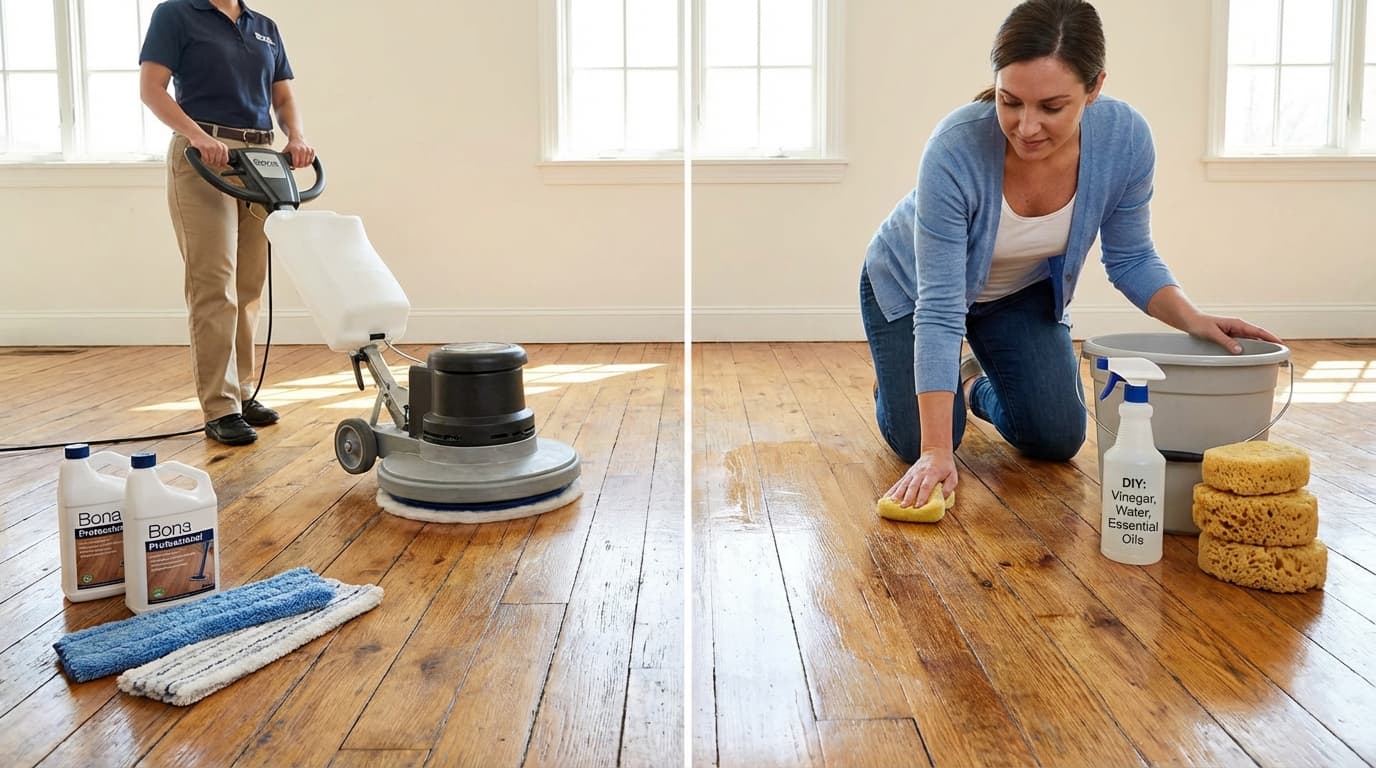
Your hardwood floors look dull even though you just cleaned them. The culprit is almost always the cleaning solution—either the wrong product, too much of it, or a DIY mixture that's slowly damaging your finish.
This guide covers the best commercial cleaners, safe homemade alternatives, step-by-step cleaning techniques, and when it makes sense to call in a professional.
What is the best cleaner for hardwood floors
The short answer: a pH-neutral commercial cleaner like Bona or EcoLab. pH-neutral means the cleaner sits right in the middle of the acidity scale—not too acidic, not too alkaline—so it lifts dirt without eating away at your floor's protective polyurethane coating. You might have heard that vinegar and dish soap work just as well, and while they can handle light cleaning, commercial formulas are specifically designed to avoid the risks that come with DIY mixtures.
pH-neutral hardwood floor cleaners
Bona Hardwood Floor Cleaner is the go-to for most homeowners. It dries fast, leaves no residue, and works on pretty much any sealed hardwood. If you want something closer to what professionals use, Basic Coatings Squeaky Cleaner delivers stronger cleaning power while still being gentle on polyurethane finishes.
Spray mop wood floor cleaners
For quick touch-ups between deeper cleanings, ready-to-use spray bottles are convenient. Method and Rejuvenate are two brands you'll find at most stores. Think of spray cleaners as maintenance tools—they keep floors looking fresh but won't tackle heavy soiling or buildup.
Concentrate floor cleaning solutions
If you have a larger home or prefer the traditional bucket-and-mop approach, concentrates offer better value per cleaning. EcoLab's no-rinse neutral floor cleaner is popular among professionals because it cleans thoroughly without leaving a film behind. You mix it with water according to the label, then mop as usual.
How to choose the right product for your finish
Here's where things get specific. Your floor's finish determines which products are safe to use, and using the wrong one can cause real damage.
- Polyurethane finish: This is what most modern floors have. Stick with pH-neutral, water-based cleaners. Avoid wax products, oil soaps, and anything with ammonia.
- Wax finish: Older homes sometimes have wax-finished floors. Water-based cleaners can actually damage the wax layer, so you'll want specialty paste wax products instead.
- Oil finish: Less common, but if you have it, you'll want oil-specific cleaners that nourish the finish rather than strip it.
Not sure what finish you have? A simple test: put a drop of water on the floor in an inconspicuous spot. If it beads up, you likely have polyurethane. If it soaks in, you might have an oil or wax finish.
How to clean hardwood floors step by step
The process works the same whether you're using a commercial cleaner or a homemade solution. Two things matter more than anything else: keep your mop damp (not wet), and work in sections so water doesn't sit on the wood.
1. Gather your cleaning materials
You'll want a microfiber mop, a bucket or spray bottle, your chosen cleaner, and either a soft-bristle broom or a vacuum with a hard floor setting. Microfiber is key here—it traps dirt instead of pushing it around.
2. Remove loose dirt and debris
This step prevents scratches. When you mop over grit and dust, you're essentially grinding sandpaper into your finish. A quick pass with a dry microfiber mop or a vacuum (with the beater bar turned off) takes care of it.
3. Mix your hardwood floor cleaning solution
If you're using a concentrate, follow the dilution instructions on the label exactly. More cleaner doesn't mean cleaner floors—it means more residue. For DIY solutions, use cool or warm water. Hot water can soften and damage finishes over time.
4. Mop with a damp microfiber mop
Wring your mop until it feels barely damp. If you're using a spray cleaner, mist a small section—about 3 feet by 3 feet—at a time. Move in a "W" pattern and work backward out of the room so you're not walking on wet floors. Never let water pool or sit on the surface.
5. Dry and buff for a streak-free shine
This step is optional but makes a noticeable difference, especially on high-gloss finishes. Go over the floor with a separate dry microfiber cloth to pick up any remaining moisture and buff out streaks.
Best homemade wood floor cleaning solutions
DIY recipes can work for light, routine cleaning. They're budget-friendly and use ingredients you probably already have. That said, they come with some trade-offs worth knowing about.
Vinegar and water solution
The classic recipe: water, a splash of white vinegar, and one drop of dish soap in a spray bottle. It cuts through light grime effectively. However, vinegar is acidic, and many flooring professionals warn that repeated use can dull polyurethane finishes over time. If you go this route, use it sparingly—maybe once a month rather than weekly.
Dish soap and warm water
Even simpler: a bucket of warm water with a few drops of pH-neutral dish soap. The key is using very little soap. Too much leaves a sticky residue that actually attracts more dirt and makes your floors look dull.
Essential oil additions for scent
A few drops of lemon, lavender, or pine essential oil add a pleasant smell to any DIY mixture. This is purely about preference—essential oils don't improve cleaning power.
Worth noting: DIY solutions handle everyday maintenance well, but they often fall short on heavy soiling, dullness from product buildup, or greasy films. For those situations, professional-grade solutions typically deliver better results.
What not to clean wood floors with
Using the wrong product is the fastest way to damage your floors. Some of the most common mistakes involve products that seem like they'd be helpful.
Steam cleaners and excess water
Steam mops are popular, but they're not safe for hardwood. The combination of heat and moisture forces water deep into the wood grain, which can cause warping, cupping, and finish damage. If water ever pools on your floor from a spill, dry it immediately.
Undiluted vinegar on polyurethane finishes
Straight vinegar is too acidic for polyurethane. Even diluted vinegar, used frequently over months or years, can slowly etch and dull the finish. When in doubt, a pH-neutral commercial cleaner is the safer choice.
Ammonia and abrasive cleaners
Ammonia strips the protective finish right off your floors, leaving the wood vulnerable to moisture and wear. Abrasive cleaners and scouring pads create scratches. Avoid any all-purpose cleaner that isn't specifically labeled safe for hardwood.
Oil soaps and wax-based products on polyurethane
Products like Murphy's Oil Soap are often marketed for wood floors, but they're not ideal for polyurethane finishes. They leave a sticky residue that builds up over time, attracting dirt and creating a hazy appearance. This buildup can also interfere with future refinishing.
| Product Type | Why to Avoid |
|---|---|
| Steam cleaners | Heat and moisture damage wood grain and finish |
| Undiluted vinegar | Etches and dulls polyurethane over time |
| Ammonia cleaners | Strips protective finish from wood |
| Oil soaps | Leaves sticky residue that attracts dirt |
| Wax on polyurethane | Creates hazy film and prevents proper recoating |
How to prevent streaking on hardwood floors
Streaks usually come down to one of three causes: too much cleaner, too much water, or a dirty mop pad. Once you know what to look for, they're easy to avoid.
- Use less product: A light mist is all you need. Over-spraying leaves residue that shows up as streaks once it dries.
- Wring the mop thoroughly: Your pad should feel barely damp, not wet.
- Swap dirty pads: As you clean, dirt transfers to the mop. When the pad looks grimy, switch to a fresh one.
- Buff with a dry cloth: A final pass with a dry microfiber pad picks up leftover moisture and creates an even shine.
How often to clean hardwood floors
A simple schedule keeps floors looking good without overdoing it. You can adjust based on foot traffic, pets, and kids.
- Daily: Dry dust mop high-traffic areas to remove grit that causes micro-scratches
- Weekly: Damp mop the entire floor with a pH-neutral cleaner
- Monthly: Check for buildup or dullness and spot-treat any stains
- Annually: Consider professional deep cleaning to assess your floor's overall condition
When to hire a professional wood floor cleaning service
DIY cleaning handles routine maintenance well. But certain situations call for professional equipment and expertise.
Heavy soiling that DIY products cannot remove
Ground-in dirt in high-traffic paths, greasy kitchen films, or neglected floors in a home you just moved into—regular mopping often can't touch these. Professional equipment and commercial-grade solutions can safely extract deep-seated dirt that DIY methods leave behind.
Dull floors despite regular cleaning
If your floors look dull no matter how much you clean, the problem probably isn't dirt. Microscopic scratches in the finish or residue buildup from years of improper products can only be addressed through professional deep cleaning or recoating.
Wax or acrylic buildup on the surface
If you've used products like Mop & Glo or Rejuvenate over the years, you may have a hazy, sticky film on your floors. Regular cleaning won't remove it. Professional acrylic removal strips old residues and restores your floor's original appearance. OneDayFinish offers this specialized service for Denver-area homeowners.
Preparing your home for sale or special events
When floors need to look their absolute best—for a party, holiday gathering, or home sale—professional cleaning delivers dramatic, noticeable results. Most jobs finish in one day with no disruption to your schedule.
Benefits of professional hardwood floor cleaning
Professional service delivers a level of clean that DIY methods can't match. Here's what you get:
- Deeper clean without damage: Professionals use correct solutions and equipment, eliminating the risk of water damage or finish problems. OneDayFinish uses a proprietary "Revival Process" designed to deep clean while protecting your floor's integrity.
- One-day service: Most jobs finish in a single day. You get your space back quickly.
- Extended floor life: Regular professional maintenance delays expensive refinishing projects by years.
- Guaranteed results: OneDayFinish backs all work with a workmanship warranty and 100% satisfaction guarantee. Licensed, insured, and background-checked technicians.
How to maintain hardwood floors between cleanings
A few simple habits protect your floors from daily wear and extend the time between professional cleanings.
- Daily dust mopping: Traps fine grit that causes micro-scratches over time
- Immediate spill cleanup: Blot spills right away—never let liquids sit on the surface
- Furniture pads: Felt pads under chair and table legs prevent scratches when furniture moves
- Humidity control: Keep indoor humidity consistent year-round to prevent gaps between boards and warping
Get your hardwood floors cleaned in one day
For Denver-area homeowners ready for professional results without the hassle, OneDayFinish delivers safe, effective service with clear pricing and no surprises.
- Free estimates within 24 hours
- Most jobs completed in one day
- 100% satisfaction guarantee
- Licensed, insured, and background-checked technicians
Get a FREE Quote or call/text anytime. No pressure.
We're a family-owned business serving Cherry Creek, Capitol Hill, the Highlands, Washington Park, Lakewood, Boulder, Littleton, Aurora, Arvada, Westminster, and surrounding communities within 30 miles of Denver.
FAQs about hardwood floor cleaning solutions
Can you use vinegar and Dawn dish soap together on hardwood floors?
A heavily diluted mixture can work on sealed hardwood for occasional cleaning. However, frequent use may dull polyurethane finishes over time due to vinegar's acidity. For regular cleaning, pH-neutral commercial products are a safer choice.
Is Swiffer WetJet safe for hardwood floors?
The Swiffer WetJet Hardwood Floor Cleaner is formulated for sealed hardwood and is generally considered safe. Check your floor's specific finish type and manufacturer recommendations before starting regular use.
How long does professional hardwood floor cleaning take?
Most professional cleaning jobs finish in a single day. OneDayFinish specializes in same-day completion so your home returns to normal quickly—often in just a few hours depending on square footage.
What is the difference between cleaning and refinishing hardwood floors?
Cleaning removes surface dirt without altering the finish. Refinishing involves sanding down to bare wood and applying new stain and sealant—a much more extensive, multi-day project. Cleaning is maintenance; refinishing is restoration.
Does professional hardwood floor cleaning remove scratches?
Professional cleaning removes surface scuffs and grime, which can dramatically improve how floors look. However, scratches that have penetrated the finish typically require screening and recoating—a separate service that OneDayFinish also offers.