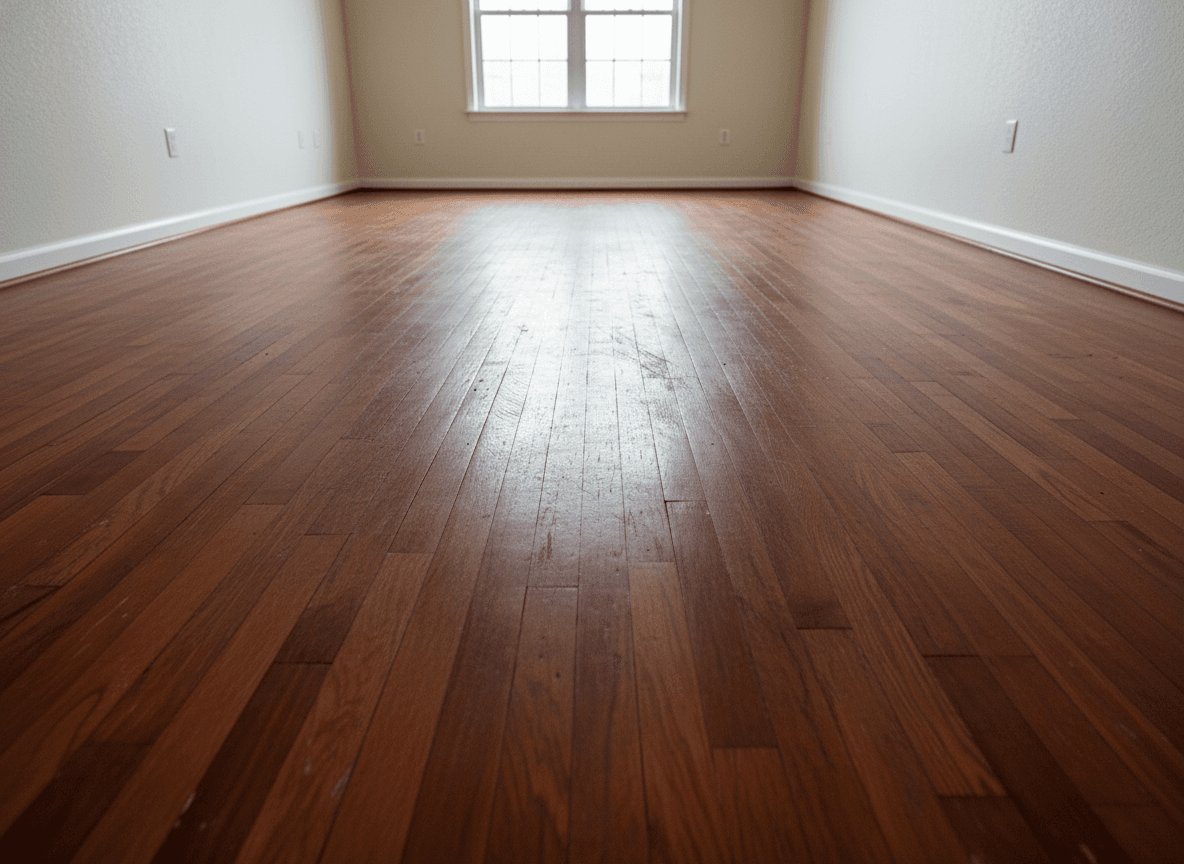
Your hardwood floors look tired—scuffed from years of foot traffic, dull where they used to shine—but the thought of a week-long refinishing project with dust settling on every surface keeps you putting it off. There's a faster way.
Recoating, also called screening or resurfacing, refreshes your floors in a single day by applying a new layer of finish over the existing one, skipping the heavy sanding entirely. Below, you'll learn exactly how recoating compares to refinishing, when each option makes sense, and what the process actually looks like from start to finish.
What is recoating and why is it faster than refinishing
Recoating is a one-day, low-mess process that refreshes your wood floors by adding a new layer of finish on top of the existing one—without sanding down to bare wood. You might also hear it called screening, buffing, or resurfacing. The process works by lightly abrading the current finish so a fresh coat of polyurethane can bond to it, restoring shine and adding protection against everyday wear.
So why is it so much faster than refinishing? The answer comes down to what you're skipping. Traditional refinishing involves heavy drum sanding that strips everything down to raw wood, then requires multiple coats of stain and finish with long dry times between each. Recoating bypasses all of that. A light screen, a single coat of finish, and you're done—often in just a few hours.
For floors that are dull or lightly scratched but still have their finish intact, recoating delivers a like-new appearance at about half the cost and a fraction of the time.
What is hardwood floor refinishing
Refinishing is the more intensive option. It involves sanding your floors all the way down to bare wood, removing the old finish, any stain, and a thin layer of the wood itself. From there, you can apply a completely new stain color and build up fresh coats of protective finish.
This process makes sense when floors have deep damage—gouges, severe scratches, or areas where the wood is exposed. It's also the only way to make a dramatic color change, like going from dark walnut to natural oak.
The trade-off? Time and disruption. Refinishing typically takes four to seven days, and the heavy sanding creates dust that can settle throughout your home even with containment measures in place.
Resurfacing vs refinishing hardwood floors
Choosing between recoating and refinishing depends on your floor's current condition and what you're trying to accomplish. Here's a side-by-side look at how the two approaches compare.
| Factor | Recoating (Resurfacing) | Refinishing |
|---|---|---|
| Time | One day | 4–7 days |
| Mess | Minimal dust | Heavy sanding dust |
| Cost | About half the price | Higher investment |
| Best for | Surface wear, dullness | Deep damage, color changes |
Time and disruption
With recoating, most jobs wrap up in a single day. You can typically walk on your floors that evening or the next morning, and furniture can go back shortly after. There's no need to clear out rooms for an extended period or make alternative living arrangements.
Refinishing is a different story. Between sanding, staining, and applying multiple finish coats—each requiring its own dry time—you're looking at rooms being off-limits for the better part of a week. For families with kids, pets, or busy schedules, that kind of disruption adds up fast.
Cost comparison
Recoating runs about half the cost of a full refinishing project. The savings come from several places: less labor time, fewer materials, and no need for heavy equipment like drum sanders.
- Labor: Recoating takes hours, not days
- Materials: One coat of finish versus multiple coats plus stain
- Equipment: A buffer with a screen versus industrial sanding machines
For floors that look tired but aren't deeply damaged, recoating offers excellent value without the larger investment.
Process and mess
The recoating process uses a floor buffer fitted with a fine abrasive screen—think of it like a gentle scuffing that creates texture for the new finish to grip. This is worlds apart from the aggressive drum sanding used in refinishing, which removes material and generates clouds of fine dust.
Even with modern dust containment systems, refinishing is inherently messier. Recoating, by contrast, produces minimal dust and allows for a much cleaner work environment throughout the project.
Durability and longevity
Both approaches, when done by professionals, provide durable protection for your hardwood. The difference is really about what you're protecting.
Recoating adds a fresh layer of polyurethane over your existing finish, extending its life and shielding against future wear. Think of it as maintenance that keeps your floors looking great and delays the need for more intensive work down the road.
Refinishing creates an entirely new finish system from the wood up. It's more comprehensive, but it's also more invasive—and for many floors, it's simply more than what's needed.
When recoating is the right choice for your floors
Recoating works beautifully in specific situations. Here's how to tell if your floors are good candidates.
Surface-level wear and dullness
If your floors have lost their shine but aren't deeply damaged, recoating is often the perfect solution. Surface scuffs from furniture legs, light scratches that haven't cut through to the wood, and finishes that have simply dulled from years of foot traffic all respond well to a fresh coat.
The key question: Can you still see the finish, or has it worn away completely? If the finish is still there—just looking tired—recoating can bring it back to life.
Floors with intact finish
For recoating to work properly, your existing finish has to be intact and bonded to the wood. That means no peeling, no flaking, and no gray or discolored patches where bare wood is showing through.
Here's a quick test you can do at home: drop a small amount of water on your floor. If it beads up on the surface, your finish is still doing its job and can accept a new coat. If the water soaks in or darkens the wood, the finish has failed in that area and refinishing may be necessary.
Time-sensitive projects
Recoating really shines when timing matters. Preparing a home for sale, refreshing floors before moving into a new place, or simply needing your space back quickly—the one-day turnaround makes a real difference in all of these situations.
You won't have to coordinate around a week-long project or worry about dust settling on everything you own.
When refinishing is necessary instead
Recoating has its limits. In certain situations, a full refinishing is the only way to properly restore your floors.
Deep scratches and gouges
When damage has cut through the finish and into the wood itself, recoating won't hide it. Deep scratches, pet claw marks that have gouged the surface, and dents from heavy impacts all require sanding to remove. A new coat of finish over the top would simply seal in the damage rather than fix it.
Bare wood exposure
Areas where the finish has completely worn away appear as gray, discolored, or noticeably different patches. In these spots, the wood is exposed and unprotected. Applying a new finish coat over bare wood alongside finished areas creates adhesion problems and an uneven appearance.
If you're seeing bare wood, refinishing is the path forward.
Major color or stain changes
Want to dramatically change your floor's color? The existing stain has to come off first, and that means sanding down to bare wood. Recoating can change your sheen level—going from satin to gloss, for example—but it can't alter the underlying color of your floors.
Benefits of choosing recoating over refinishing
When your floors qualify for recoating, the advantages are straightforward:
- One-day completion: Floors are ready to use by evening or the next morning
- Minimal mess: Light screening produces far less dust than heavy sanding
- Lower cost: Typically about half the price of full refinishing
- Extends floor life: Regular recoating can delay major refinishing for years
- Less disruption: No need to vacate rooms or relocate furniture for days
For busy households, the convenience factor alone often tips the decision.
What the recoating process looks like
Here's what to expect when you schedule a professional recoating, step by step.
1. Floor assessment and preparation
A technician inspects your floor's condition to confirm it's a good candidate for recoating. This includes checking for wax or acrylic buildup, which can interfere with how the new finish adheres. You'll receive a written estimate before any work begins—the price quoted is the price you pay.
2. Cleaning and light abrasion
First, the floor gets a thorough deep cleaning to remove dirt, residue, and anything that might prevent proper bonding. Then comes the screening: a buffer with a fine abrasive pad gently scuffs the surface, creating the texture the new finish grips onto. This step is quick and produces minimal dust compared to traditional sanding.
3. Fresh finish application
A new coat of polyurethane goes down in your choice of sheen—matte, satin, semi-gloss, or gloss. Professional-grade formulas dry quickly while still providing lasting protection. You can choose based on the look you want: matte and satin hide minor imperfections and look more natural, while semi-gloss and gloss offer more shine.
4. Drying and final walkthrough
The new finish dries within hours. After a final inspection and complete cleanup—including removing all drop cloths and equipment—you're left with beautifully refreshed floors and a tidy space. Most homeowners can walk on their floors that same day or the next morning.
Get your floors refreshed in one day
OneDayFinish offers professional recoating for Denver-area homeowners who want fast, clean results without the usual contractor runaround. Our Revival Process takes floors from scuffed to stunning in just one day.
- Free estimates within 24 hours
- Licensed, insured, background-checked technicians
- 100% satisfaction guarantee—if you're not happy, we make it right
- Clear, upfront pricing with no hidden fees
No pressure. Just beautiful floors—fast.
FAQs about hardwood floor refinishing vs resurfacing
Can engineered hardwood floors be recoated?
Yes, most engineered hardwood with a real wood veneer can be recoated as long as the existing finish is intact. The screening process is gentle enough that it won't cut through to the thin veneer layer underneath. However, if the finish has worn through in spots, refinishing engineered floors becomes trickier because there's less wood to sand.
How soon can you walk on hardwood floors after recoating?
Most recoated floors are ready for light foot traffic within a few hours, with full normal use by the next morning. This is dramatically faster than refinishing, which often requires 24 to 48 hours before walking and several days before moving furniture back into place.
Does wax or acrylic buildup prevent recoating?
Wax and acrylic create a barrier that prevents new polyurethane from bonding properly. If your floors have been treated with these products over the years, the buildup has to be professionally removed before recoating can proceed. Otherwise, the new finish may peel or flake. OneDayFinish offers acrylic and wax removal as a preparation service for exactly this situation.
What sheen options are available when recoating hardwood floors?
You can choose from matte, satin, semi-gloss, or gloss finishes. Matte and satin are popular for hiding minor imperfections and creating a more natural, contemporary look. Semi-gloss and gloss offer more shine and tend to be slightly easier to clean, though they also show dust and scratches more readily.
How do you maintain hardwood floors after recoating?
Regular sweeping or dust mopping removes the grit that can scratch your new finish over time. For deeper cleaning, a damp mop with a pH-neutral wood floor cleaner works well. Avoid vinegar, harsh chemicals, and excessive water—all of which can break down the finish and shorten the time before your next recoat.